For industries where the capital cycle functions, Marathon splits purchase candidates into 2 groups.
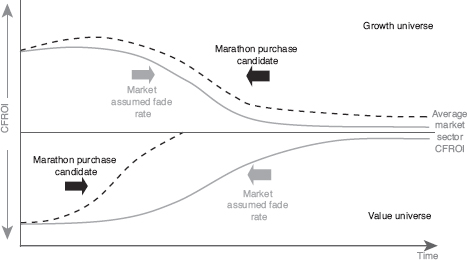
1. Growth Candidates
Businesses in this group are those that have much further economic growth in front of them than the market is giving them credit for. They can continue to grow, even if they are not the dominant payer, because the mature market size is so much bigger than investors are giving the business credit for. The example that comes to my mind for this is Uber. Early on, despite being unprofitable, investors viewed its terminal value as that of the taxi industry. However, the app and gig economy unlocked a TAM much larger than originally speculated. People took more rides than taxis ever provided, they ordered food delivery through Uber Eats, and they even expanded into product delivery and now travel.
2. Value Candidates
Businesses in this group are those where the barriers to entry are much higher than the market is giving them credit for — either through capex requirements or pure difficulty of operations. In this scenario, the market assumes that the competitive dynamics of the market will eat away the margins of the business faster than what might actually happen. The example of this, I think, is Booking Holdings. The market thinks of them as a marketplace for hotels, that AI will be able to disrupted because it can look at the website of every hotel in a city and give you options. What it doesn’t give credit for though is the integrations that Booking has with small independent hotels across Europe. These are technical integrations to have up-to-date room availability, pricing, photos, etc., which required years to decades of in-person work to onboard, set up and integrate. It is not something that can necessarily be disrupted by an LLM reading their website. Other features, like a long history of reviews and other network effects bolster the difficulty of replacing the business.
Connections
Link Explanation: Once you have identified an industry that the capital cycle is likely to be relevant in, you have to analyze the businesses within the industry for their long term economic prospects. The Growth and Value framework above provides a relatively straight forward way of performing the assessment.