In January 2026, I built a little 10-week Introduction To Japanese History course. This article represents my current knowledge of the country’s history, as well as knowledge subsequently gained. Each period also contains a “tourism” section, containing related sites and a short description of their significance to the era.
Heian Period & Kyoto’s Golden Age (794 – 1185)
Background
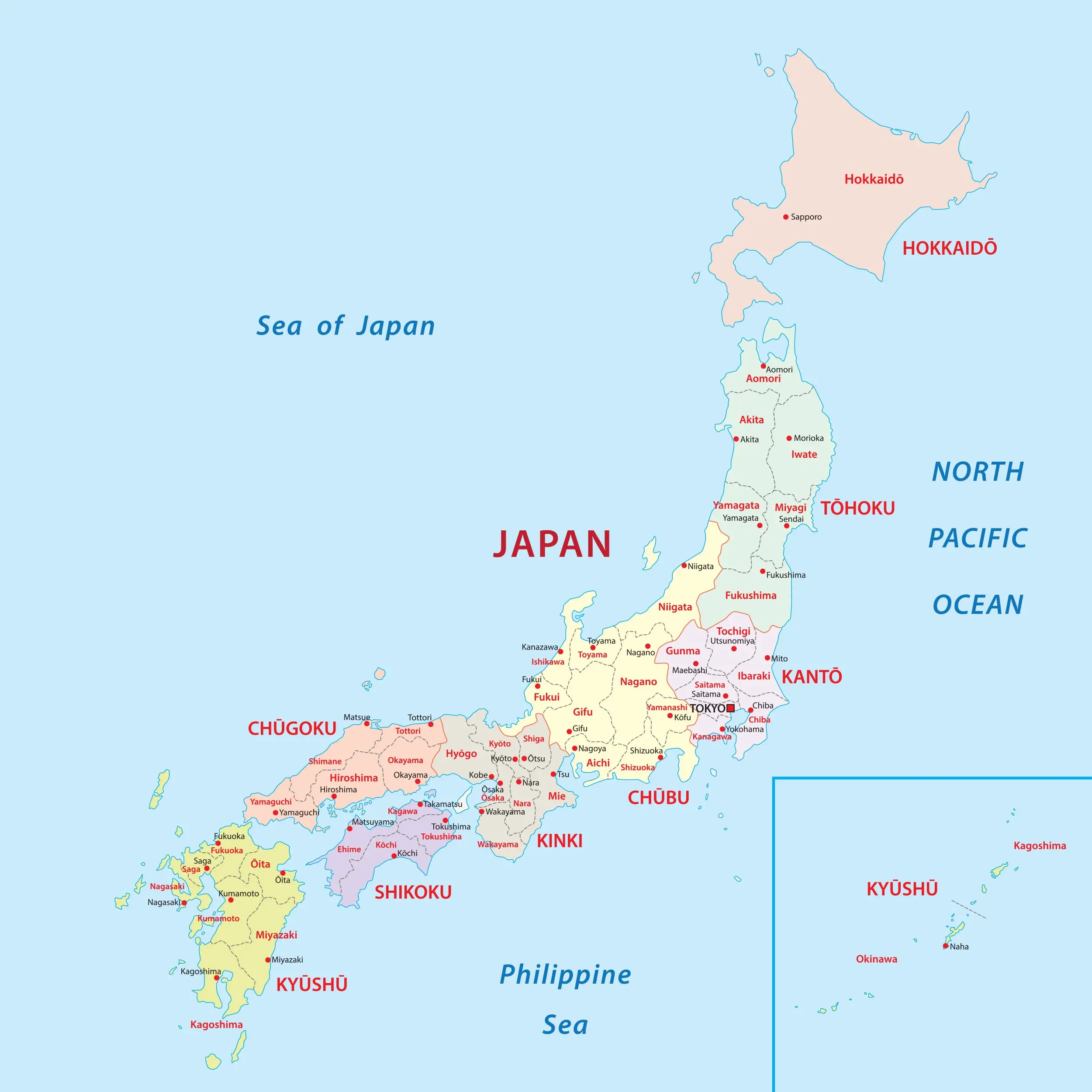
The first permanent and official capital of Japan was Nara, located in the central region of Kinki. In the early 8th century, the empire was still young and a considerable effort was made by the government to consolidate under an official legal code and culture. Part of this task was to build Nara as a religious centre for buddhism, as well as the seat of the emperor.
While successful, the plan actually backfired. By the end of the century, the wealth, cultural prominence and political influence of the city’s monks actually threatened the power of the emperor himself. Rather than challenge the temples politically or militarily, the emperor decided to just build a new capital instead.
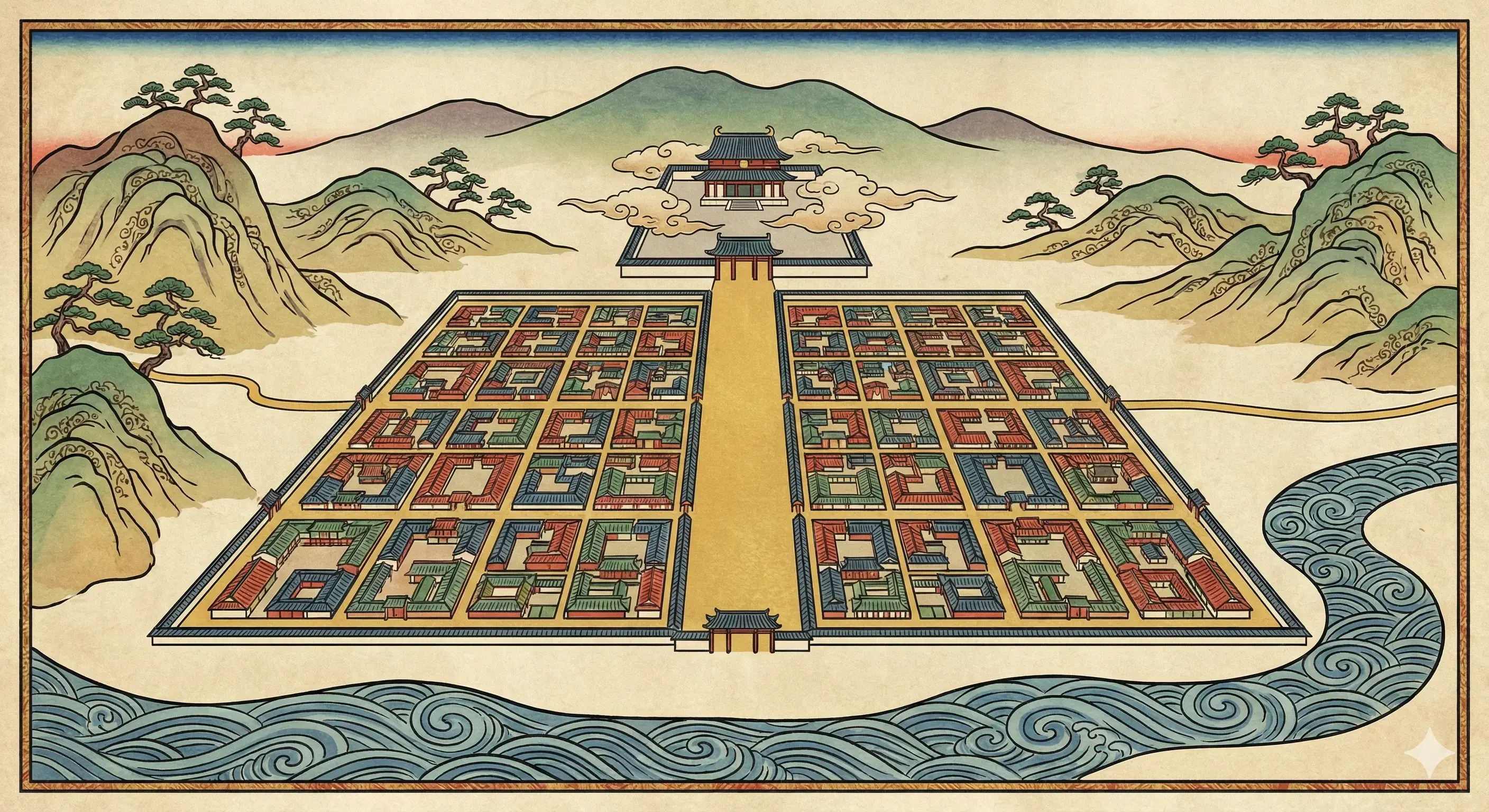
Approximately 50km to the North, the new Capital was established in Heian-kyo (Kyoto). Like Nara, it was heavily modelled on the Chinese Tang-dynasty capital at the time, Chang’an, to project a higher level of authority and legitimacy. The entire city was laid out in a checkerboard pattern that can still be seen in modern arial maps of Kyoto.
The imperial palace sat at the northern centre of the city, acting as a focal point for all urban activity. Running directly from the gates of the city to the palace was a massive, 90 meter wide, main street. Smaller roads ran left to right, sorting the rest of the buildings into a grid.
Culture
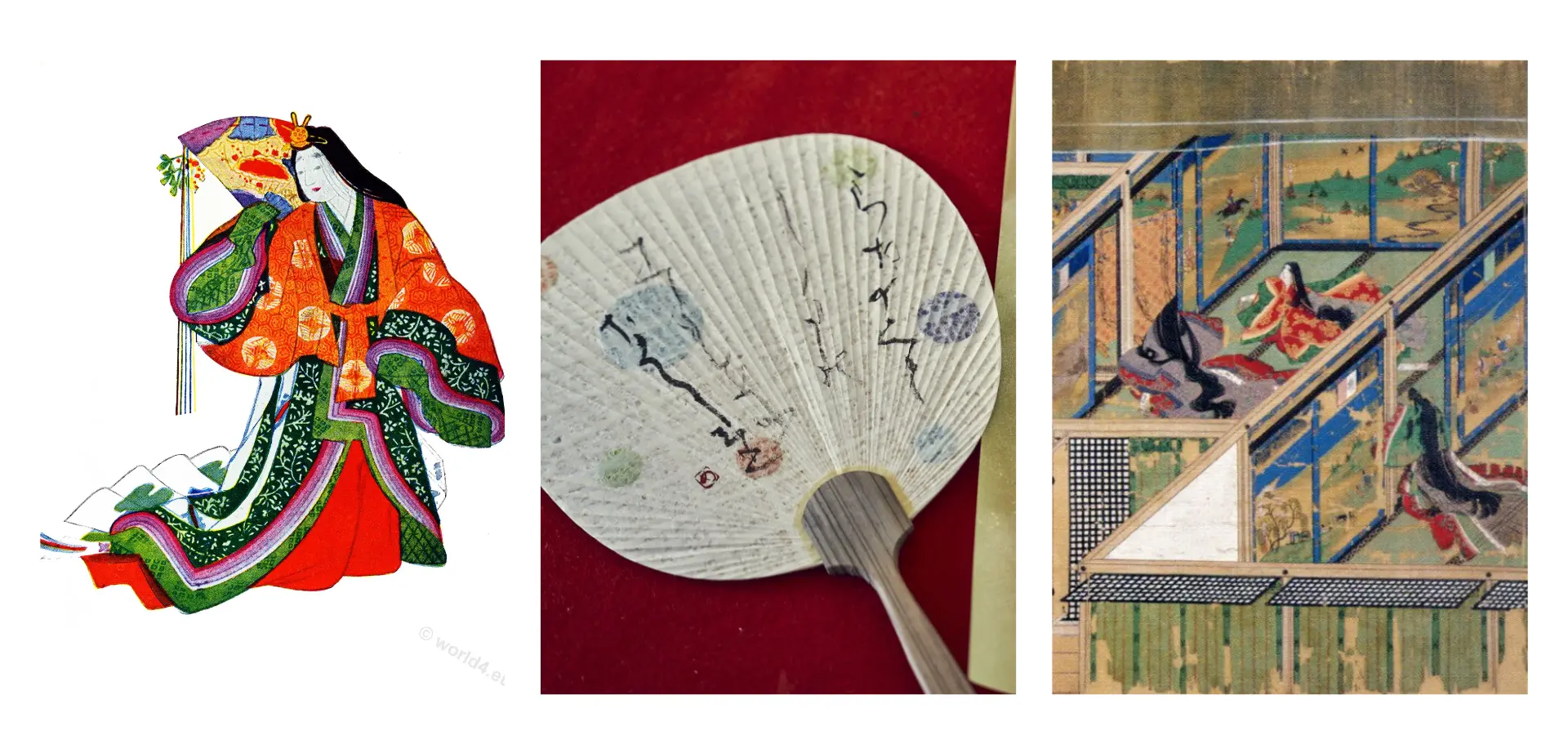
The Heian period is considered a cultural golden age for Japan. In fact, the culture of the imperial court was extremely obsessive over aesthetic form, appearance and taste. The social status of an individual could be ruined by mismatched colours, or poorly worded poetry.
It was seen as unsavoury of women to speak or write Chinese at the time, so another major cultural development of the time was the invention of kana. An alphabet-like writing system, it was the first in Japan to have enough flexibility to allow the writer to express feelings and emotions over purely archival facts. Two great books came out of this period Murasaki Shikibu’s The Tale of Genji, which may be the worlds first novel, and Sei Shōnagon’s The Pillow Book.
Kana also facilitated the keeping of journals of which Lady Murasaki’s gives us a deep look into the high pressure environment of the imperial court. Key themes are a buddhist sense of melancholy on the impermanence of life, loneliness in a punishing social environment, and jealousy or distain for Sei Shōnagon who Lady Murasaki feels is much less impressive than she acts. Descriptions of the palace and the daily routines of it’s inhabitants after the birth of the prince also give insight on what it was like to live in that time.
Politics & Economics
Although securing power was the primary motivation for moving the capital from Nara to Kyoto, over the era power eventually shifted away from the emperor to the Fujiwara family through a practice dubbed Uterine politics.
Essentially, the Fujiwaras married into the royal family through their daughters. Once a heir was produced, the emperor was pressured into abdicating where then the patriarch of the Fujiwara family would step in as regent to the infantile emperor-to-be. Over time, the emperors began to push back and attempt to rule as ‘retired emperors’. The power struggle between the emperors and the Fujiwara’s contributed to the decay of the administrative side of the government.
After a series of smallpox epidemics drasitically reduced the population size, the government put in place several initiatives to incentivize families to go out and reclaim the land that had been abandoned. Specifically, they put in place a new rule that some lands could be held indefinitely, tax-free. This created a large rush by wealthy families to accumulate this land as fast as possible. As farmers and land owners tried to reduce their taxes payable to the government, a system developed whereby the landowner would donate their land to a powerful party like a monastry or politically elite family. That party would then use their weight to get the donated land approved as a tax-free shōen. Finally the land would be leased back to the original owner as “managers” at a lower rate than the taxes. This system became heavily abused by essentially all citizens including the elites in the government themselves. By the 12th century, nearly 90% of the land in the empire was shōen, leaving the government with almost no tax base.
Without tax income, the ability for the government to enact policy or even protect and police its citizens collapsed. With rising crimes rates across the country side, farmers and peasants were forced to form their own militias for protection. Literally “to serve”, these militias became the first Samurai and began the downfall of the Heian regime.
Tourism
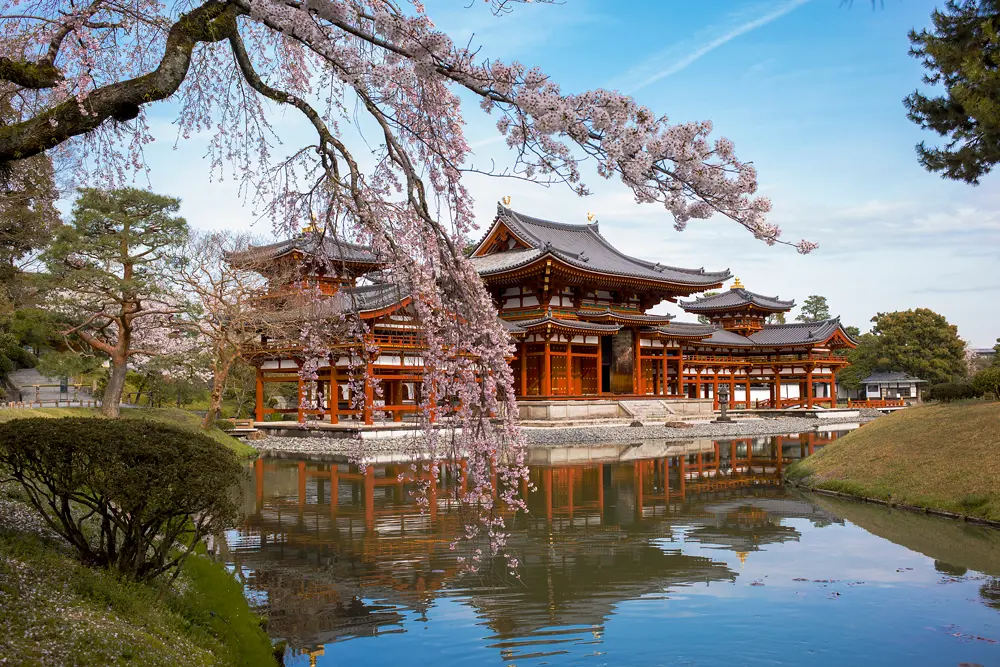
Byodo-in Temple (Kyoto)
The Byodo-in Temple is one of the few remaining structures from the Heian period. Built in 1053, it was one of the villas of the Fujiwara family.
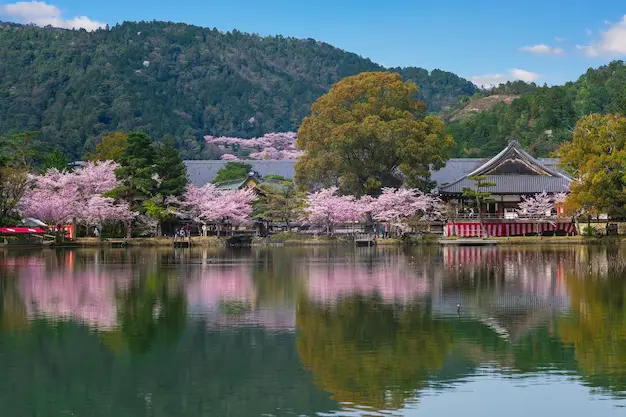
Daikaku-ji Temple & Osawa Pond (Kyoto)
The Daikaku Temple was originally built for Emperor Saga (809 - 823). Osawa pond, in front is the oldest surviving artificial forest pond in Japan. Heian nobility often held moon-viewing parties on dragon-headed boats, like those described by Lady Murasaki in her journal.
On the day of the imperial visit, His Excellency had the boats poled over to where he could inspect them. They had been specially made for the occasion. They were most impressive; you could almost imagine that the dragon and mythical bird on the prows were alive.
The Diary of Lady Mursaki
Kyoto City Heiankyo Sousei-kan (Kyoto)
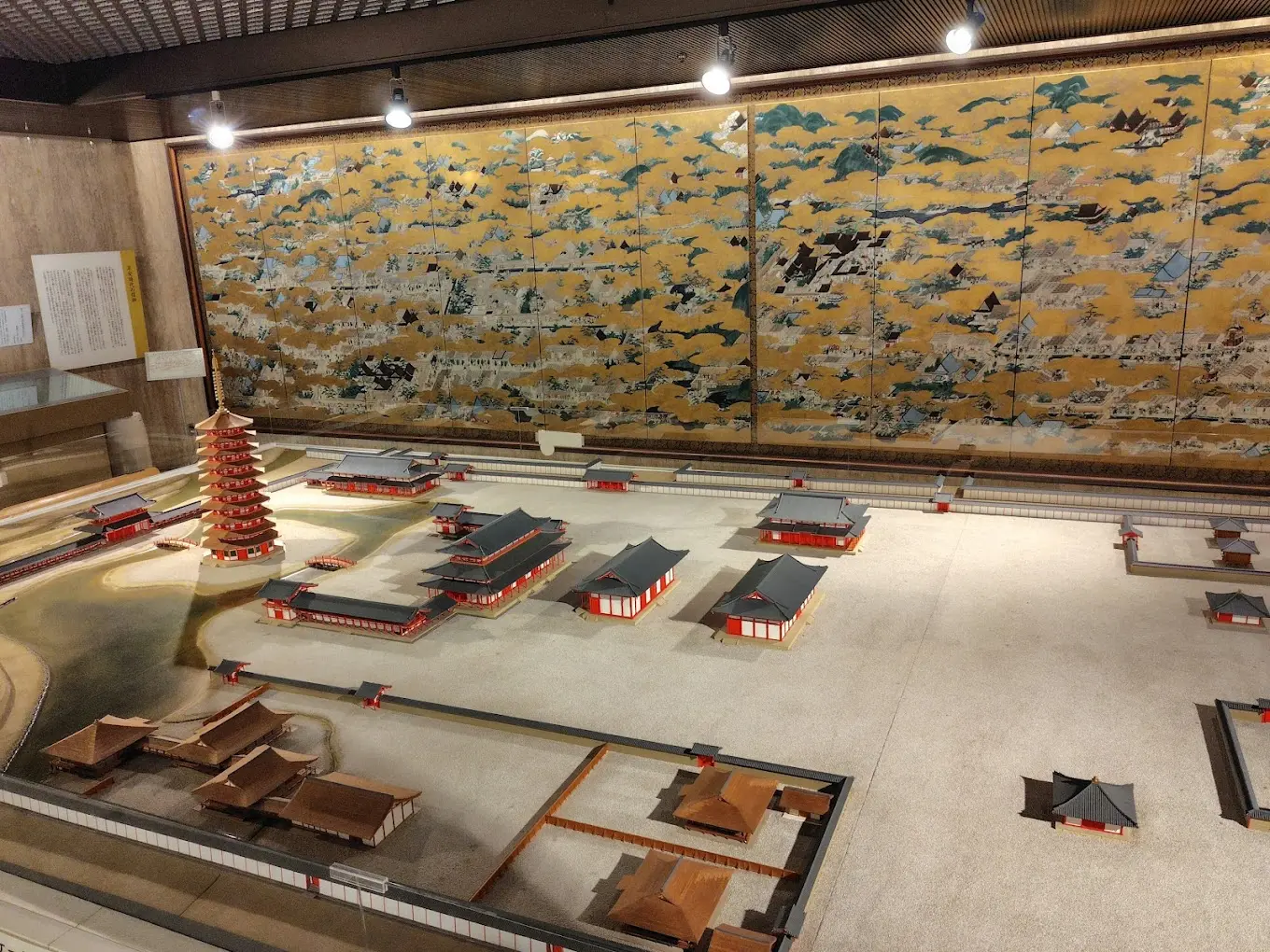
A museum dedicated to the Heian period. It features a 1/1000th model of the city and the palace as well as artifacts such as clothing, art, etc.
Warriors Take Power (1185 – 1333)
The Kamakura Shogunate
As the people of Japan became increasingly dependent on the new Samurai warrior class for protection, the Samurai themselves realized they held the real power, not the empire. Taira family, rulers at the time, were eventually defeated after a series of battles and insurrections, later known as the Gempei Wars.
The leader of the Samurai, Minamoto no Yoritomo was an incredibly ruthless and jealous man. After consolidating his victory he set out to eliminate any potential rivals, including remaining Fujiwara family members, as well as his own brother. Yoritomo’s genius though, was in sanctioning the continued authority of the Emperor and the civil government in Kyoto. He established a system of dual authority with Kyoto hosting the imperial court and legal administration. The military and polices authority was established in the Eastern fishing village of Kamakura.
This dual government system was called the Bakufu government, stemming from the word for the physical field tents used by military commanders during campaigns. The administration was split into three parts which allowed for the duel-location functioning of the government.
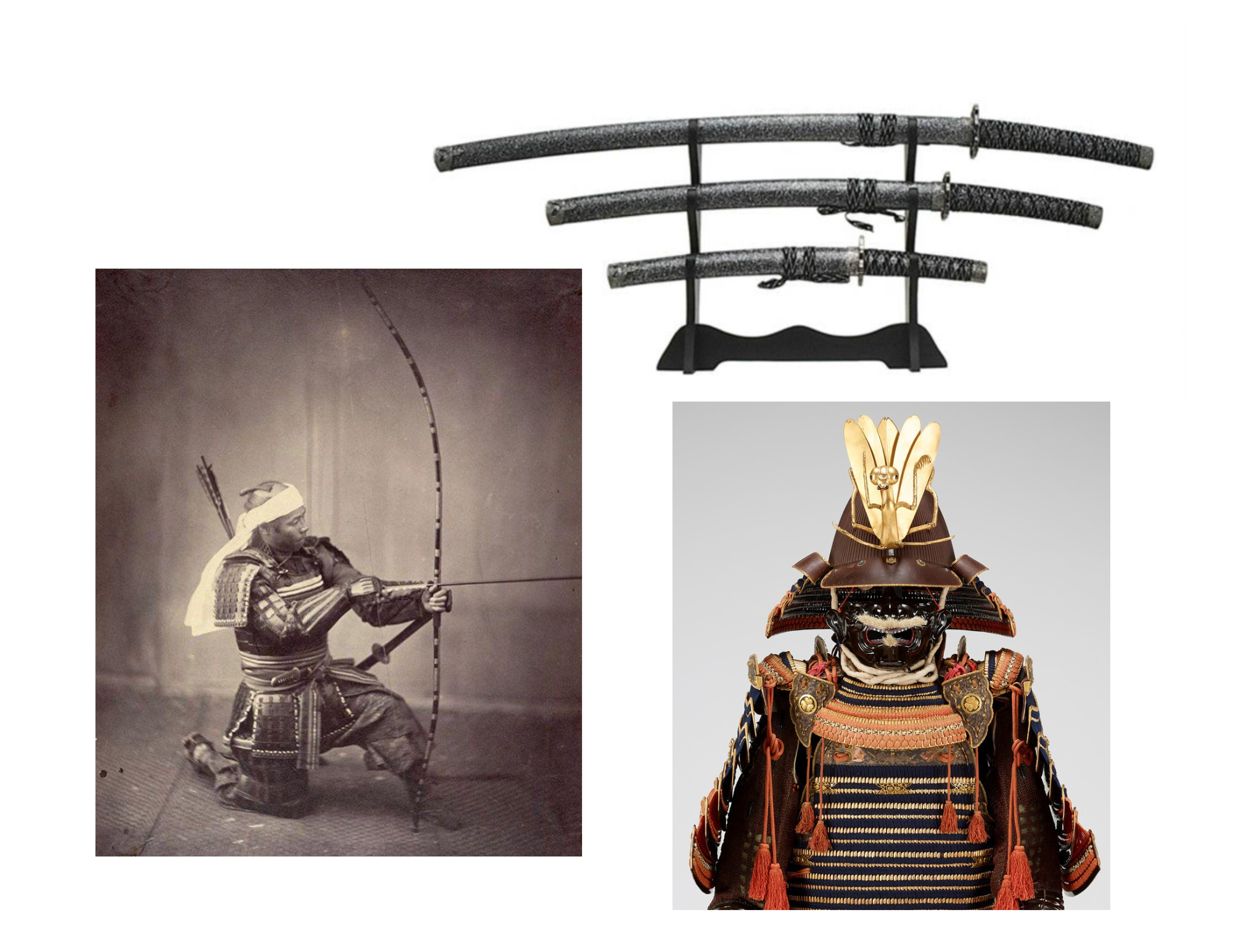
- The Samurai Office - responsible for supervising the conduct of the Samurai.
- The Administrative Office - Admin, legislation and legal affairs.
- The Court of Appeals - Settlement of civil disputes among the governing Samurai lands.
Samurai Ethos
Though it was often romanticized in later centuries, the Samurai Ethos was one of pragmatism and ruthlessness. This was the period where the culture of On was instituted. Under the On system, warriors were bound to their lord under a very transactional expectation that service equalled reward, either in the form of land or promotion. This system was often dominated by opportunity over loyalty and there are many examples of Samurai switching sides for rewards or inheritances.
This was also the period were seppuku or ritual suicide developed as a cultural practice. In such a military culture, the practice started as a way to avoid the disgrace of being captured, but evolved into a method of accepting responsibility for mistakes, following a lord into death, or even in protest to an unjust or unsupported decision of a lord.
Mongol Invasions
The first attempt to conquer Japan by the Mongols came in 1274. However, before first contact was made with land, the Mongols turned around and returned to China. Scholars are unclear why the Mongols retreated, but Japanese lore claims a typhoon appeared and destroyed the fleet, forcing surrender. Despite the lack of fighting, external threat did bring a unification between the Samurai that was previously non-existent.
By the time the second invasion attempt was made in 1281, the key targeted sites had been fortified over the prior eight years. Even with their massive force of over 140,000 warriors, the Mongols struggled to establish roots. This time though, after seven weeks of warfare, an actual typhoon destroyed the Mongolian fleets. The Japanese interpreted the miracle as an act of divine intervention and named the event kamikaze (divine wind). This divine wind has continued as a symbol in Japanese culture until today.
The Downfall of the Kamakura
Ironically, while the defeat of the Mongols saved Japan and the Kamakura government, it also weakened the government to such a degree that it was never able to recover. The massive defensive essentially bankrupted the government. As explained above, the culture of the Samurai was highly transactional, so after the defeat of the Mongols, reward was expected. This though, was a defensive war, not an offensive one, and there were no spoils to be divided. What wealth the government did hold, it gave to Buddhist priests rather than the warriors, whose prayers supposedly summoned the kamikaze. After years of On, the vital contract between the Kamakura government and its warriors was broken.
Culture
As the culture of the period shifted from the siloed and abstract life of the Heian period to the ruthless realities of Kamakura martial law, so did the art. Artisans of the time carved hyper-realistic, muscular sculptures of Deva Kings to reflect the raw strength of the warrior. The illustrated hand scrolls, Emakimono, which combined sequential paintings with narrative text, generally documented the bloody insurrections of the time, rather than the courtly romances they often did in the past period. Swordsmithing reached its relative peak during the Kamakura period as well. Beautiful blades, containing thousands of layers of folded steel were highly prized by the warring Samurai.
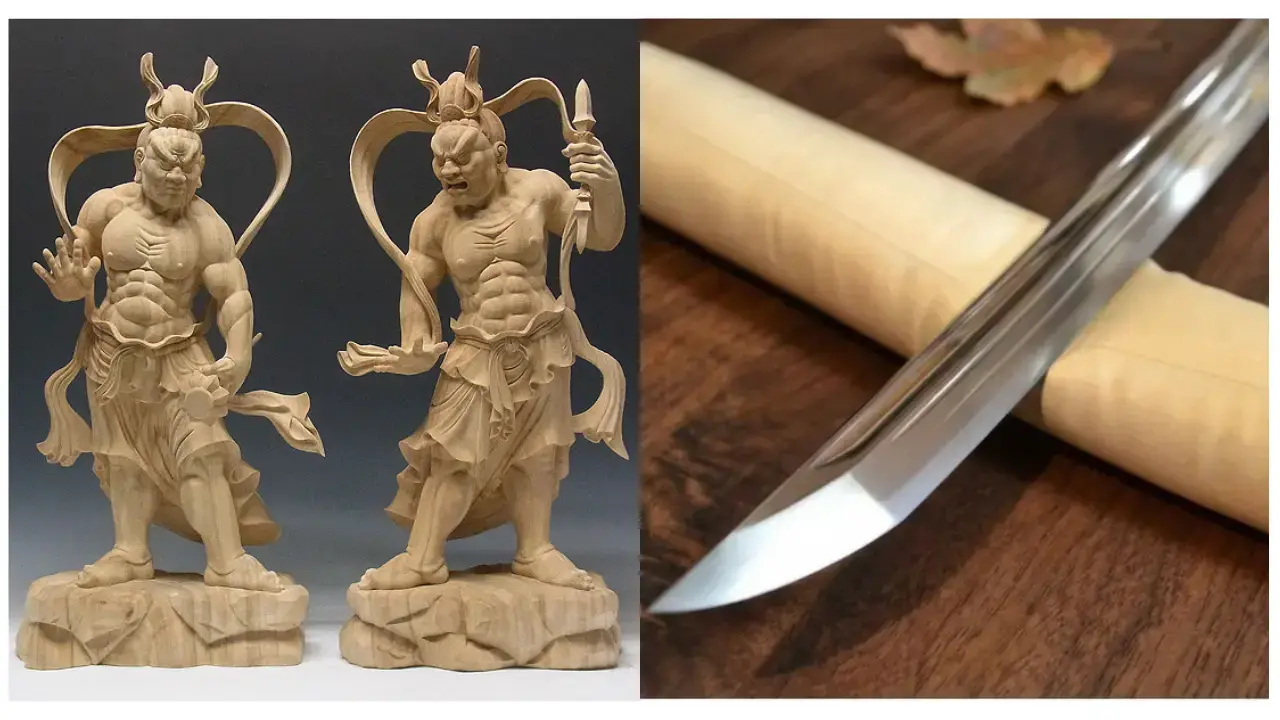
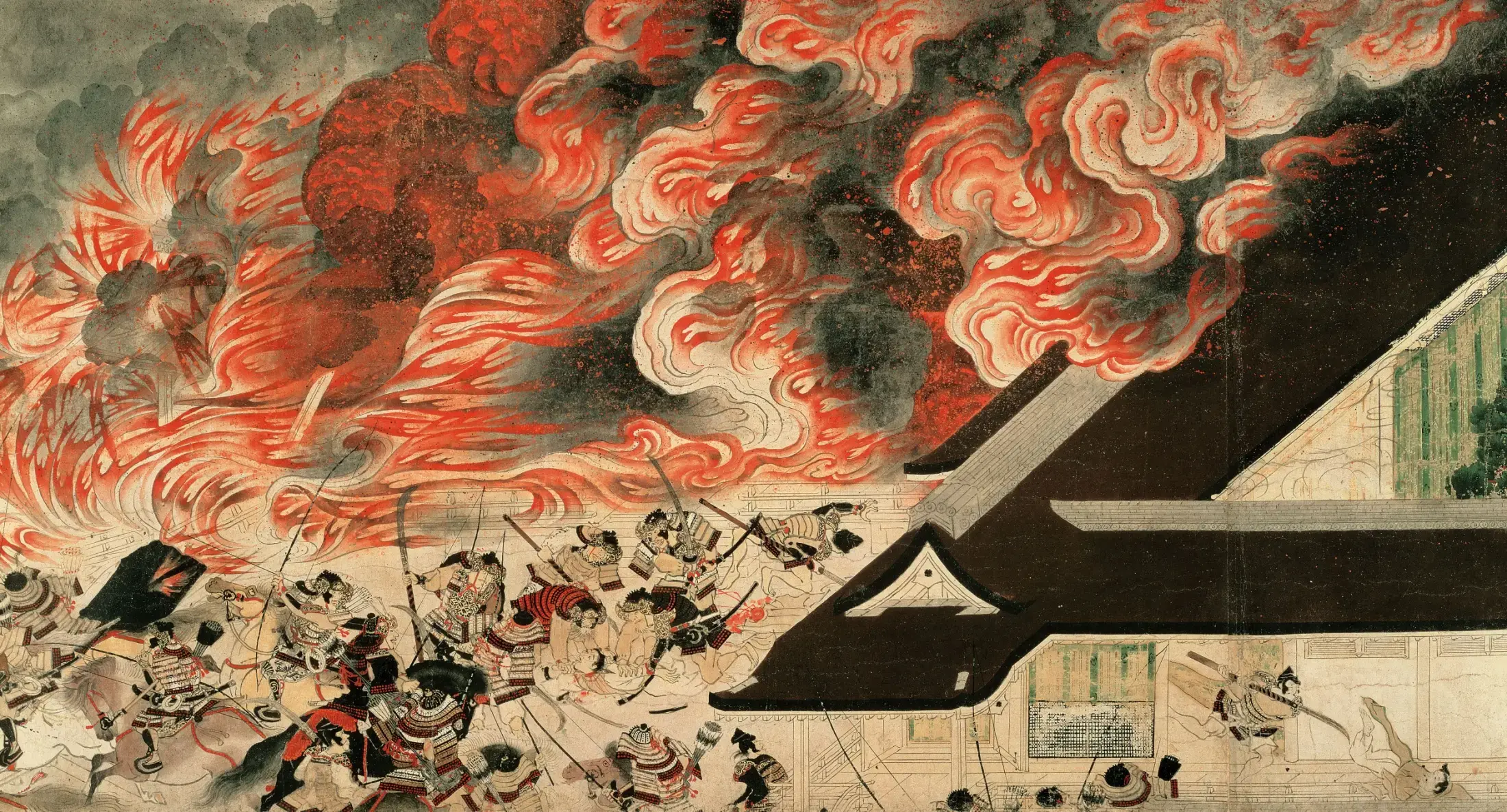
Tourism
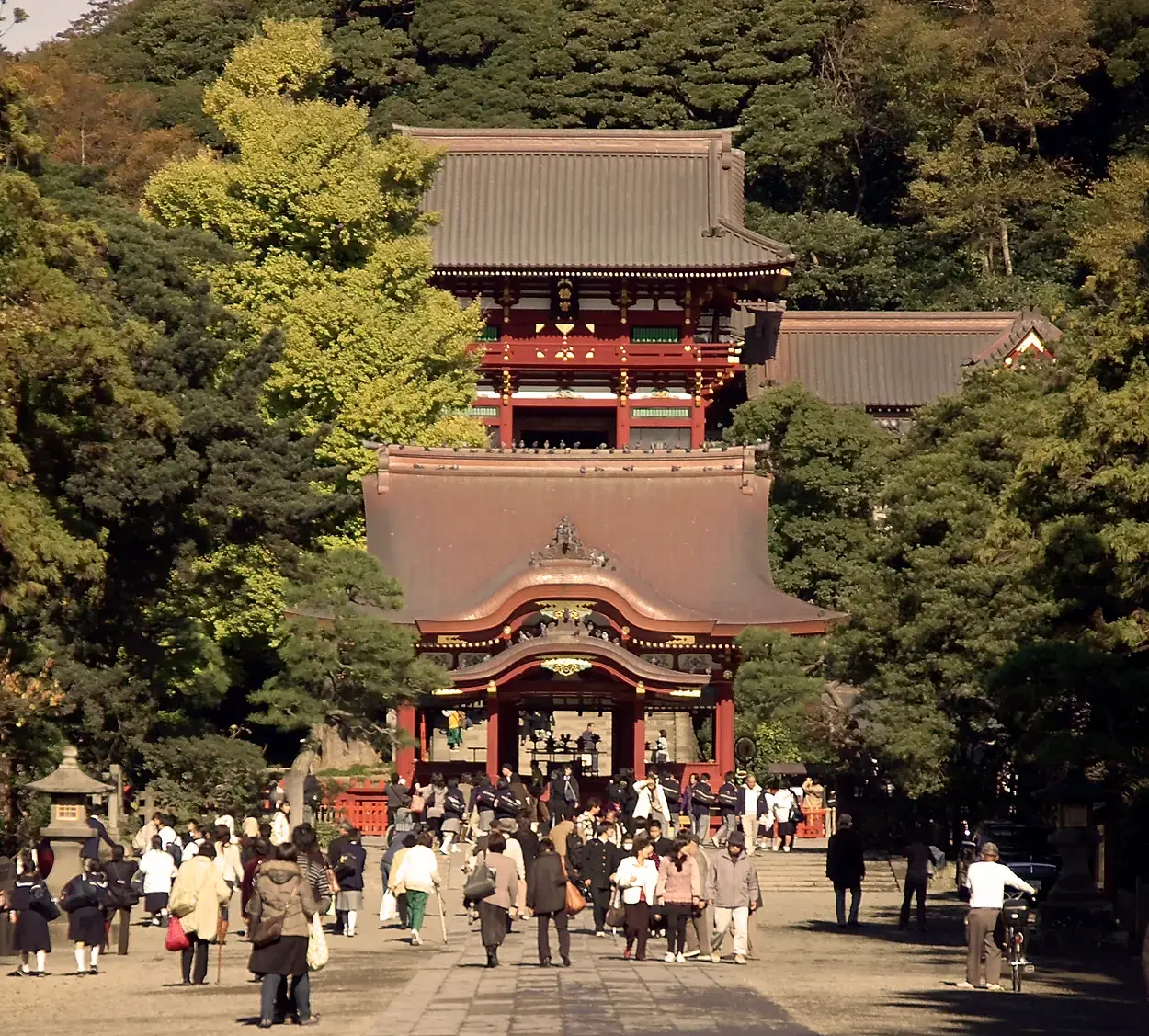
Tsurugaoka Hachimangu Shrine (Kamakura)
The Tsurugaoka Hachimangu Shrine is the foundational political and spiritual shrine in Kamakura. Minamoto no Yorimoto, the first Shogun, moved the shrine to its current location in 1180. The approaching sandō leads all the way from the sea to the temple and is lined with traditional Japanese cherry trees.
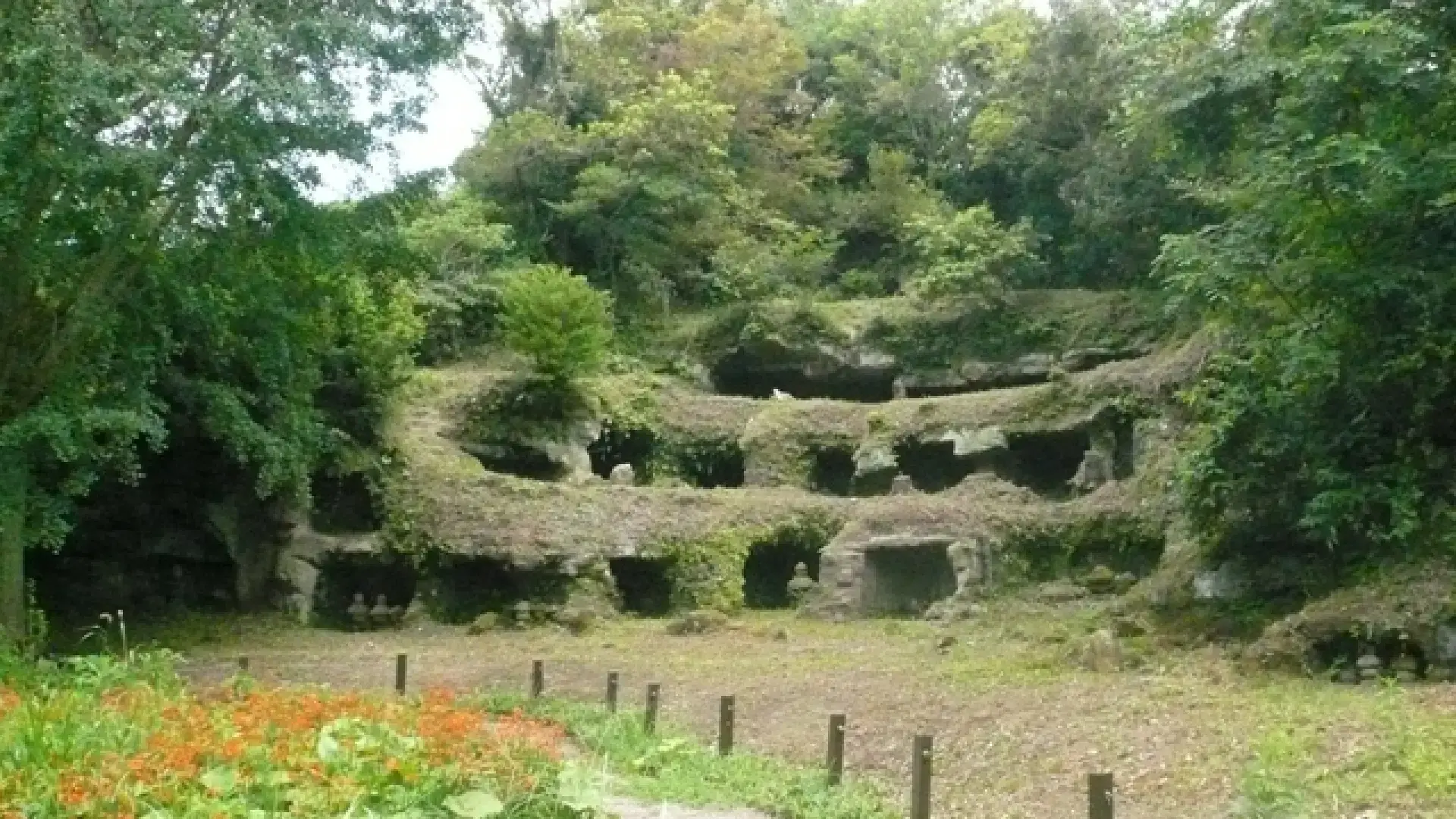
The Yagura Tombs (Kamakura)
The shogunate did not allow for burials within the city limits of Kamakura. So rather than traditional cemeteries, thousands of cave tombs called yagura were carved into the soft stone of the surrounding hills to house the remains of samurai and priests.
Sanjusangen-do (Kyoto)
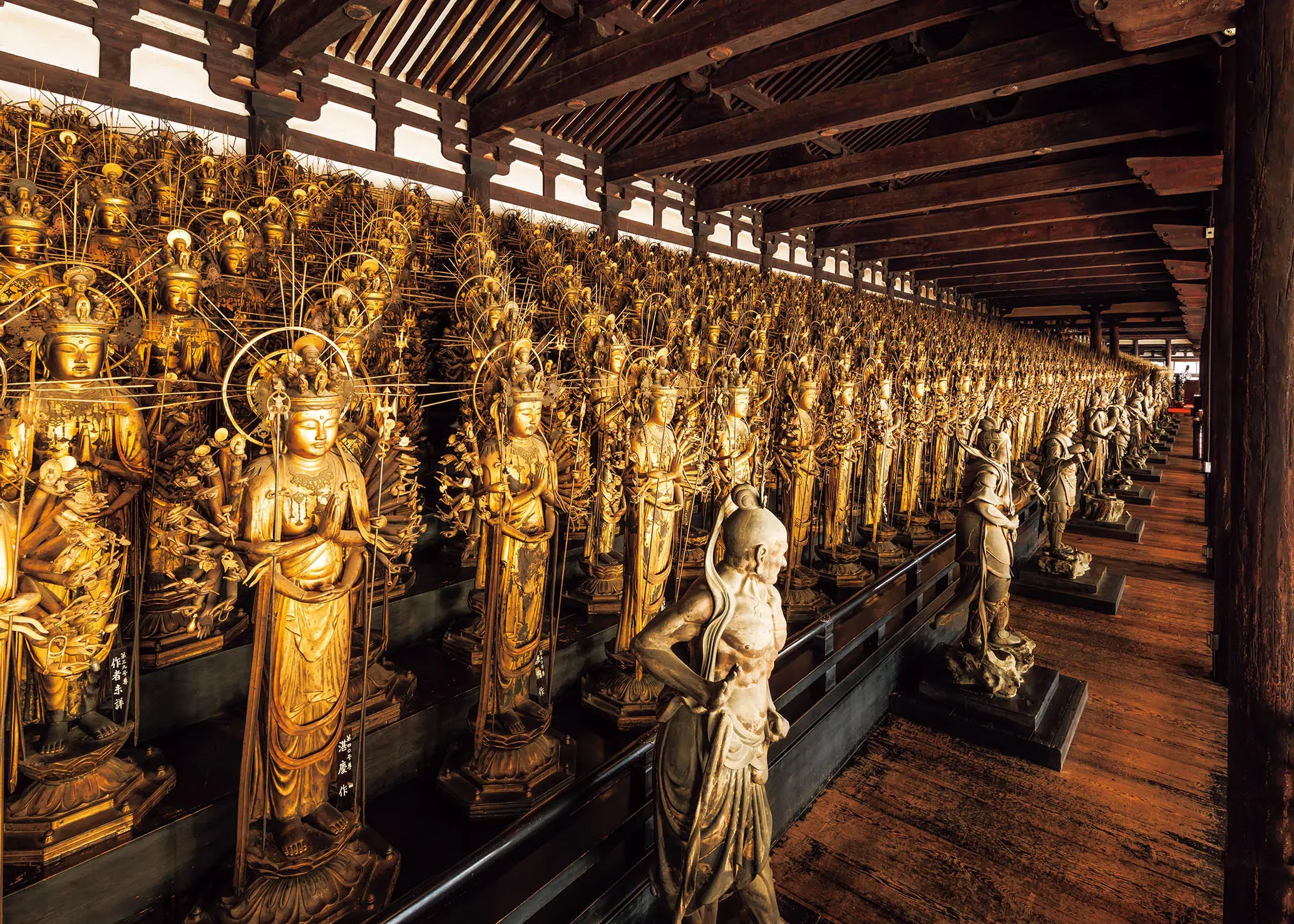
Kyoto remained the cultural hub of Japan, despite the core governing administration moving to Kamakura. While the original Sanjusangen-do temple was destroyed by a fire, it was rebuilt in 1266. It houses over a thousand life-sized statues which illustrate the hyper-realism valued in the era.
The Ashikaga Period (1336 - 1573)
The Ashikaga period is one of the most paradoxical periods in Japanese history. It was a period of extreme chaos, war, and suffering. It also birthed the serene, Zen cultural movements we associate with Japan today, such as the famous tea ceremony and raked stone gardens.
The period follows the disruptive Kamakura period, marked by Samurai taking power. The key figure in the shift towards the Ashikaga period is Emperor GoDaigo. For centuries the emperors of Japan were traditionally figureheads; often children when they were proclaimed emperor, with a father or grandfather pulling the strings behind the throne. GoDaigo stands out because he rose to the throne in his thirties and brought with him an incredible ambition and drive to change the entire political landscape of Japan. He wanted power and authority for himself, and wasn’t afraid to start a war to do so.
He recruited the help of a powerful general, Ashikaga Takauji. The two of them successfully overthrew the Kamakura government. But GoDaigo made a massive political mistake immediately following his claim to power. In an act of what can only be hubris, he denied the right of reward to the Samurai who fought with him to take power. Takauji immediately turned around and pointed his army at GoDaigo, forcing him to flee.
GoDaigo escaped and settled in the southern city of Yoshino, setting up his own court and government to rival the administration that Takauji now presided over. The bifurcation of power created a 60-year period of profound national conflict, with the northern government claiming military authority and the south claiming its right to rule by God.
The Ōnin War
Tensions rose for nearly 60 years as provincial warlords were continually sucked into the conflict, leaving their home provinces unguarded. By 1467, tensions peaked in what is called the Ōnin War. Sparked by a succession dispute on the Ashikaga side of the country, the bickering of the Kyoto elites signalled to every local warlord that there really was no central authority left. Warlords from all over the country made their way to the capital with as many as 250,000 troops. They fought to the death in the streets of Kyoto, destroying two-thirds of the city. Much of the cultural capital built up over the previous 700 years was reduced to ash.
This was the spark of what came to be known as “the age of the warring states.” The next 100 years was marked by extreme conflict, brutal authoritarianism, and what came to be known as “Ge-koku-jō”, or “Those below, subjugating those above.” Essentially, it was a complete inversion of the social pyramid. Anyone could kill and overthrow anyone. Rank and position were meaningless. Power was all that mattered.
In a world where only the strong survive, the most brutal often rise to the top. That is exactly what happened in the 1500s. The period marked the transition from the ruling Shugo class to the Daimyo elites. Where the Shugo of the prior century were essentially office positions appointed by and loyal to the Shogun, collecting rent from peasants on behalf of the aristocracy, the Daimyo were completely different. Much closer to the feudal system of Europe, the Daimyo held power purely through military force and were loyal to no one. The population beneath the Daimyo was split between hereditary rank and outsiders, and land was no longer a matter of rent and stewardship, it was owned outright by the Daimyo and enforced via primogeniture. To understand the brutal political churn of the period, it is telling that of the 142 major Daimyo that existed in 1563, only 45 of those families remained by 1593.
Economics
One of the most interesting developments of the turbulent Ashikaga period was that it also produced an economic explosion in productivity.
In order to defend themselves, the Daimyo built massive, stone-walled castles, which were surrounded by merchant districts, temples, and artisan workshops. Despite the constant destruction, Japan became one of the most urbanized countries in the world for its time, and for the first time began to benefit from economies of agglomeration. On top of this, the constant demand from the militaries forced an acceleration of trade throughout the country.
The struggle for merchants, though, was that hauling product from one side of the country to the other amidst civil war was essentially a suicide mission. The first innovation to combat this was the invention of Kawase, or “bills of exchange”. This was paper, trust-based rights of ownership that allowed trade to occur without the physical movement of product. Second was the formation of trade guilds. Maniacal warlords were always a threat to individual merchants, but by forming guilds, each warlord risked being cut off or blacklisted as a trading partner entirely. Guilds allowed merchants and craftspeople to secure regional monopolies on products ranging from vegetable oil to armour, effectively becoming established industries rather than segregated producers and vendors.
Culture
The defining cultural movement of the Ashikaga period is one of Zen Buddhism. As the people suffered waves of war, famine, and chaos, the serene, simple, and sobering ethos of Zen offered a mental and emotional anchor point amidst the disorder.
Four Pillars of Ashikaga Aesthetics
| Shibui | Sabi | Wabi | Yūgen |
|---|---|---|---|
| Austere/Restraint | Aging/Mellowness | Serenity/Solitude | Mystery/The Unseen |
| The rejection of the flashy or ornate. The acceptance of simplicity and the subdued. | The desiccation, and profound depth acquired only through usage and the passing of time. | The tranquil, almost melancholic peace in simple, solitary settings. | The subtle, deeper meaning beneath the surface. |
The Tea Ceremony
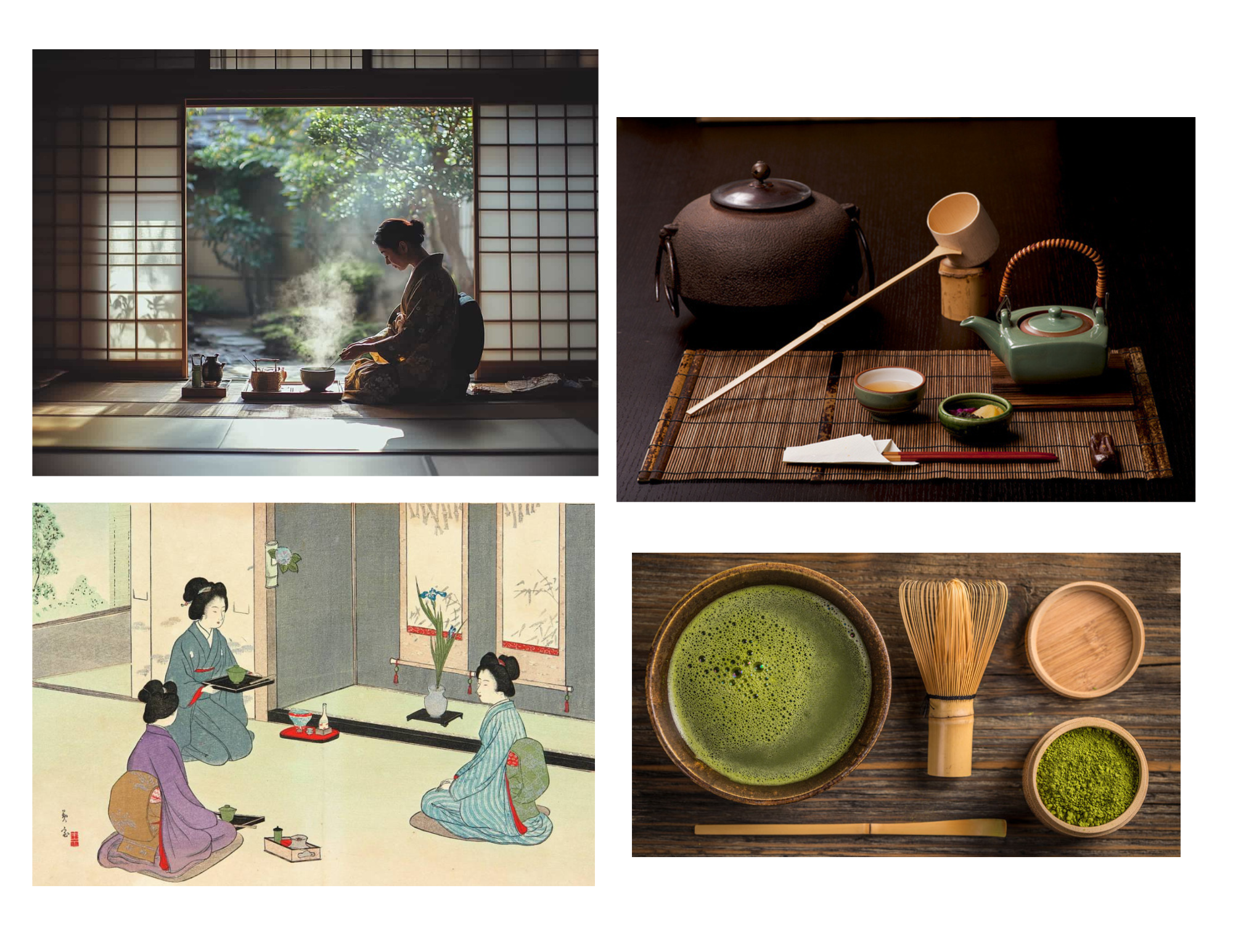
There is no better example of Zen culture than the emerging practice of the tea ceremony. It is a philosophical practice based on the two centre columns above — Wabi-Sabi — emphasizing the beauty of simplicity, where the worn-down clay bowl of the farmer becomes more beautiful than the elegant, decadent gold cup of the aristocracy.
Importantly, the ceremony was not a practice accessible only to the educated and high class. It was for everybody, and it functioned that way. In fact the tea ceremony may be the most unifying and powerful social melding ritual in Japanese history. A wealthy merchant, a battle-hardened Samurai, and a courtly noble could all sit together in a tea hut and interact without social stigma or hierarchy getting in the way.
The Rock Garden
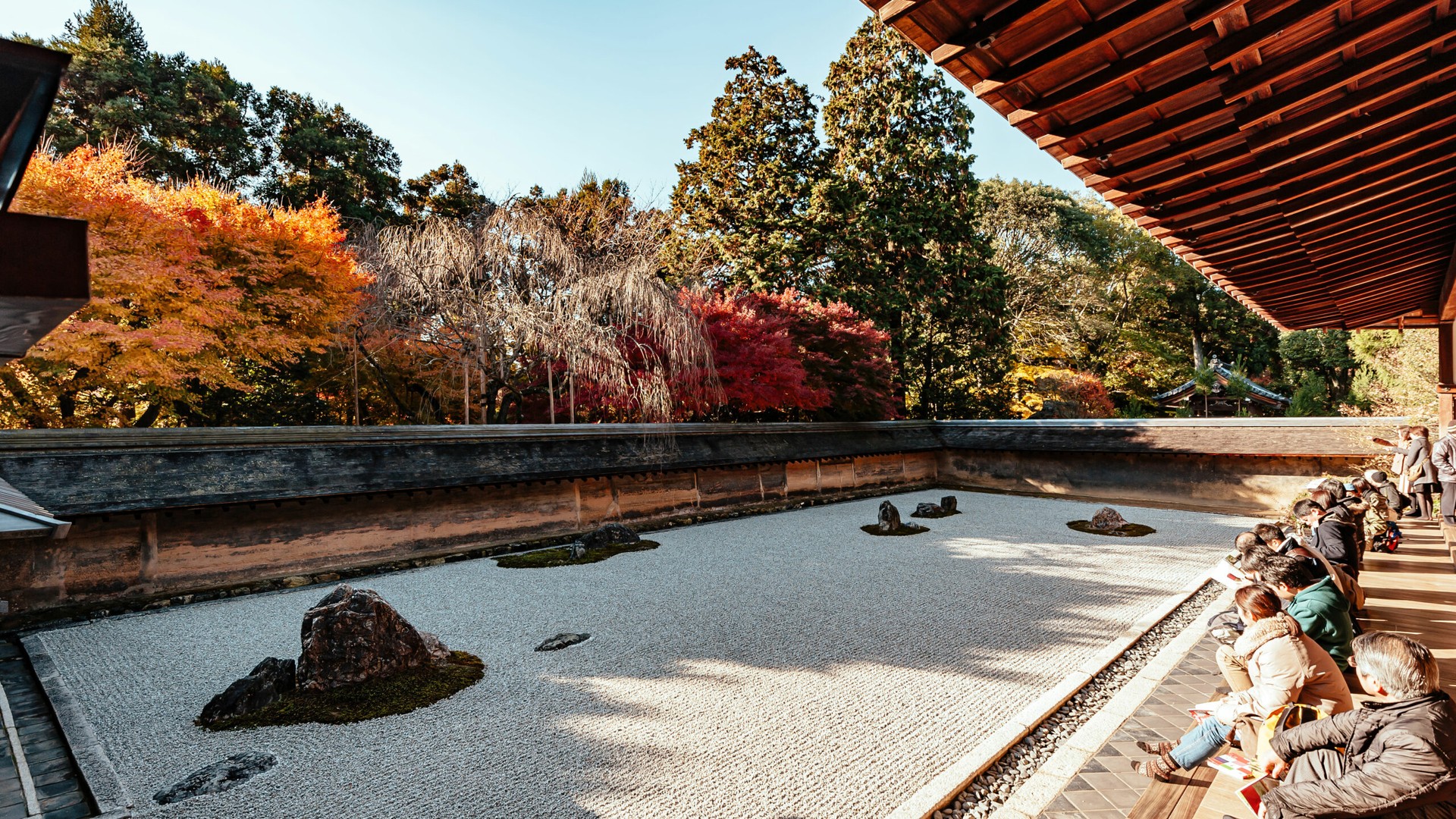
The other artistic result of Zen Buddhism was the rising prominence of dry gardens, which take the essentialism of Zen to the extreme. The style uses rocks and sand to replicate and invoke geographical landscapes like mountains, islands, and seas. They encourage the viewer to be guided by the garden elements themselves, exemplifying the principle of Yūgen. For example, a large, heavy rock may suggest fixing your posture and calming your breath.
Tourism
Ryōan-ji rock garden (Kyoto)
This is the most famous rock garden in Japan and widely considered a masterpiece of minimalist Zen philosophy. There are 15 natural rocks arranged in mossy groupings surrounded by raked gravel. The star feature is that from the viewing platform, at least one rock is always hidden from view. It exemplifies Yūgen by highlighting the limitations of physical existence and the natural truth that there is always more we are unaware of.
Tea Ceremony (Widely available)
The most authentic destinations to experience the tea ceremony are Kyoto and Uji. However, it is possible to find similar experiences in Tokyo, Osaka and elsewhere. The original tea ceremony, founded by Sen no Rikyu, is a multi-hour event that starts with a meal, followed by a thick tea and finished with a thinner tea. Nowadays though ceremonies are truncated to just a thin tea.
Kinkaku-ji & Ginkaku-ji (Kyoto)
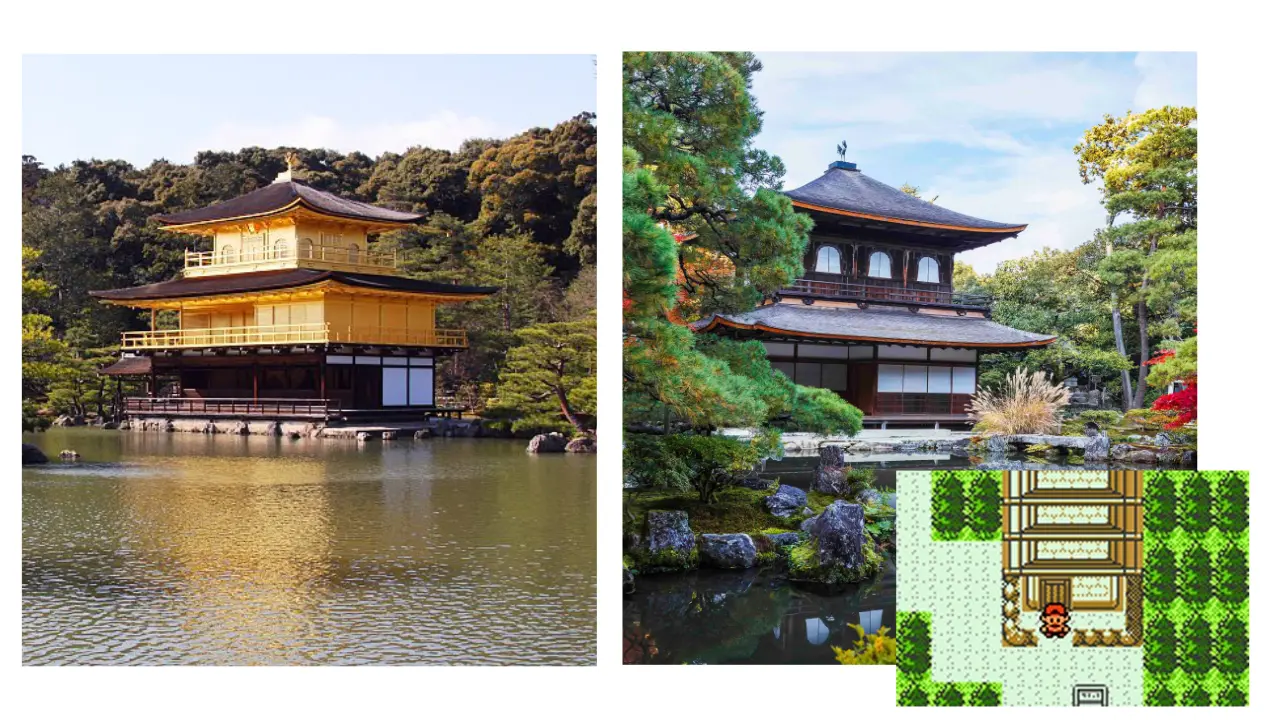
The Golden Pavilion and the Silver Pavillion, respectively. These two structures tell a wonderful story of the Ashikaga period. The first, Kinkaku-ji, was build by the third Shogun at the height of the dynasty. The second, Ginkaku-ji, was built by the eighth shogun. It was originally commissioned as a retirement retreat, however it was never finished as the Ōnin War consumed everything. It was never actually plated in silver and remains as a quiet, weathered structure displaying the arc of the Ashikaga period. On a fun note, these two towers are also the inspiration for the Tin Tower and the Brass tower of Ecruteak City in Pokemon Gold and Silver.
The Tokugawa Period & Great Peace (1603 – 1853)
Tourism
Late Tokugawa & The Fall of the Bakufu (1853 – 1867)
Background
The events of the late Tokugawa period unfold against social and governance structure that was simultaneously comfortable and deeply outdated. The government’s dominant ambition for the prior 250 years had been to keep Japan isolated and frozen in time. Politics, culture and economics, all in a permanent stasis while the rest of the world charged forward through the second industrial revolution. Over time, this goal became increasingly difficult to maintain as the economic realities of the country changed, along with external pressures from the outside world.
The official social hierarchy placed the Samurai at the top and merchants at the very bottom. The economic reality was the exact opposite. Trade was viewed by the Samurai elites as morally reprehensible, so after centuries of avoiding it, the merchants held almost all the real wealth in the country and those Samurai suffered in a perpetual state of debt to the merchants. While the economy slow developed, the government fought it almost every step of the way. Every attempt to fix the lop-sided economy was less of a reform and more of a refusal. No attempt was actually made to understand the system and fix it, they just tried to reverse it.
Around 1760, Shogun Tanuma Okitsugu realized what was happening and made a genuine attempt to adapt. He debased the coinage, raised taxes and actually encouraged exports. The economy grew. But Tanuma himself was also an incredibly corrupt individual and his stance towards personal enrichment set the tone for the rest of the administration, and the bureaucracy was set to rot from the inside out.
In 1783, Mt. Asama erupted. A five-year famine set in across much of the country, brought on by blackened skies and soot covered crop fields. There is documented evidence of cannibalism over this period, due to the extreme state of starvation much of the country suffered under. This was more than an issue of politics for the government, in the eyes of the people, they had lost the mandate from heaven to rule.
A new Shogunate stepped in with a familiar narrative when times are hard: return to the past. The new administration forgave the Samurai debts to the merchants in an attempt to restore social order. This backfired completely. Without confidence that their loans were protected, the merchants simply stopped their lending activities entirely. Capital investment collapsed and with it, much of the economy.
The important thing to understand of this era was that by the time Commodore Perry’s warships coasted into Tokyo’s harbour, the empire had been quietly rotting from the inside for nearly a century.
Culture & Economics
The final century of the Tokugawa period can be described as a slow but steady squeezing from the top and bottom of society, until the entire structure collapsed in on itself.
The Samurai class was disintegrating under their debts, but refused to show any weakness. Cultural expectations demanded the preservation of face at all costs, so despite their debts, Samurai continued to purchase expensive polished white rice rather than the cheaper brown rice. The irony was that brown rice contains vitamin B, while white rice does not. The already impoverished class became worryingly malnourished.
Below the Samurai, the peasantry swung desperately from one famine to the next. Over the two and a half centuries of Tokugawa rule, there were over 2,800 recorded peasant disturbances or riots. Nearly one a month on average. Infanticide, known as Mabiki, or “sending back”, became a widespread economic strategy for families unable to feed themselves. It was common enough that the population of Japan flatlined for nearly 150 years.
To understand the ineptitude of the regime, consider that one of the most consequential policies of the era was an accident. The official dictum of Sankin-kōtai required every lord in the empire to spend alternating years Edo, with their families held in the capital permanently. The intended effect was political. No lord could rebel without abandoning his family, and the cost of two households and a biannual journey across the country left none of the Daimyo wealthy enough to try. But the unintended effect was a profound force for nation-building. The regular convergence of lords from every corner of the empire, like a year-long conference, became an event of cultural exchange. Fashions, ideas, books, and best-practices that were once geographically isolated were carried into the capital and back out again across the country. Sankin Kkōtai is recognized as one of the driving forces behind the standardization of the Japanese language itself.
Revolution
The end came from outside. Through the mid-nineteenth century, the American whaling industry had expanded dramatically, with ships sprawling out over a large portion of the Pacific. Wrecked ships occasionally deposited foreign sailors on Japanese shores. Given the Japanese hostility towards foreigners, they were treated poorly. The poor treatment of American citizens gave the government moral justification to engage with the Japanese.
In 1853, Commodore Perry sailed unannounced into Edo bay with an entire squadron of massive, coal-powered warships. Stained black from their own smoke, it was unlike anything the Japanese had ever seen. he paid no attention to the guards or warnings. He simply sailed right into the capital, pointed his guns at it, and demanded a meeting. The regime, and entire country was shaken to its core.
The Bakufu had few options. In desperation, they did something they hadn’t done in over two hundred year: it asked for the Emperor’s advice. It was an attempt to buy time. Instead, it announced its own weakness to its people. For a regime whose authority rested on the projection of absolute martial control, the admission that it didn’t know what to do was nearly as politically damaging as Perry’s warships themselves.
In the end, the government had no choice but to concede to Perry’s demands of opening their markets to trade. The consequences were immediate, catastrophic, and plunged Japan further into decay. The country had been isolated for so long that its markets bore almost no relation to the outside world. Gold, set by tradition at a 1:5 ratio against silver domestically, traded at roughly 1:15 globally. The arbitrage opportunity was spotted by foreign merchants instantly. They exchanged silver for gold in Japan, sailed to Hong Kong, and converted it back at triple the rate. Wealth drained out of the country. The government debased its currency to compensate, but this only triggered a surge of hyperinflation. Food prices soared and the people went hungry again.
Unlike the past famines though, this time the government and the people had an external cause to blame. Having a target to direct their anger resulted in a large number of rebel, domestic terroristic groups. The most famous of these were the Shishi or “Men of Spirit”. Their goal was to essentially provoke enough chaos internally that the government would be forced into open conflict with the West. In 1860, in front of the gates of Edo, they publically assassinated Li Naosuke, one of the most powerful men in the country. The administrative centre of the country was losing its grip on the social and political order. Provinces on the outskirts, like Choshu and Satsuma begun to take matters into their own hands, and in 1863 issued orders to fire on Western ships and expel all foreigners. A combined fleet of British, French and Dutch ships responded by sailing in and levelling both provinces to the ground.
It was a catastrophe. It was also clarifying. The remaining leaders of Choshu and Satsuma finally understood that the old order was no longer a viable option. The only question was who would replace it. Maybe them? Financed by their colonial-style sugar monopoly, they began importing and hoarding Western firearms. Technologically, they were far more advanced than anything the Bakufu was using. But the real force-multiplier for them came through the repealling of two centuries of firearm prohibition. In other words, they armed the peasant class.
Upon hearing of this, the Bakufu dispatched its army to march across the country and end the rising rebellion. It was defeated, and in that defeat lost its right to claim unquestioned power in Japan. The final Shogun, Tokugawa Keiki, saw the writting on the walls. He attempted to structure a graceful exit. He proposed resigning and returning formal authority to the Emperor, while remaining in place as a kind of “prime minister”. This was refused by multiple parties. They hired mercenaries called ronin to continue the burning, looting and destabilizing of the establishment to ensure the destruction of the Shogunate, rather than reformation. In the end, there was no major battle, no restructuring or passing of power. The regime that had ruled Japan for two and a half centuries, consumed from every direction at once, simply dissolved.
Tourism
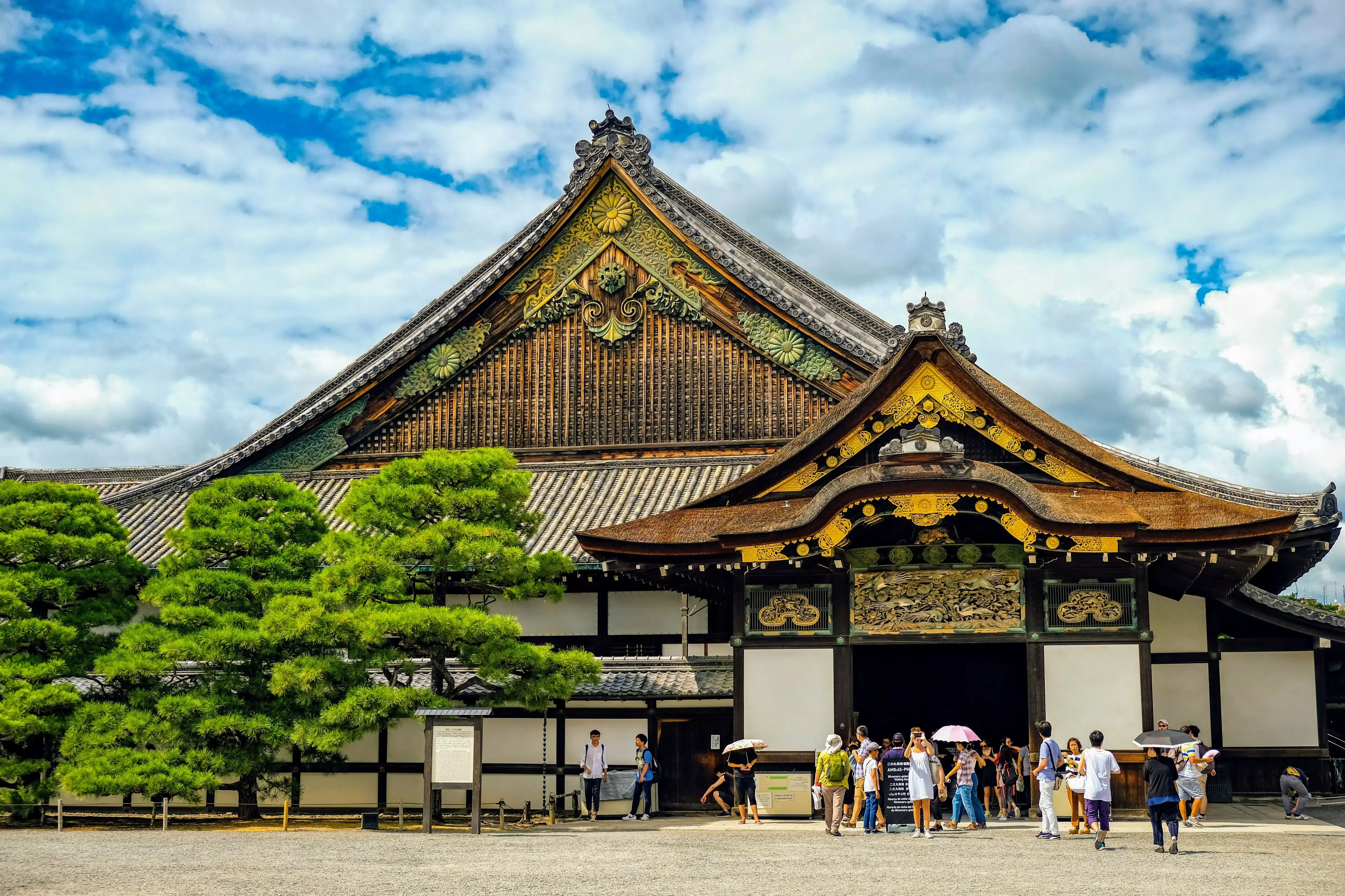
Nijō Castle (Kyoto)
In 1867, the final Shogun, Tokugawa Yoshinobu, officially declared the return of political power to the Emperor. Thus it is the place where the two and half century long Shogunate regime came to an end.
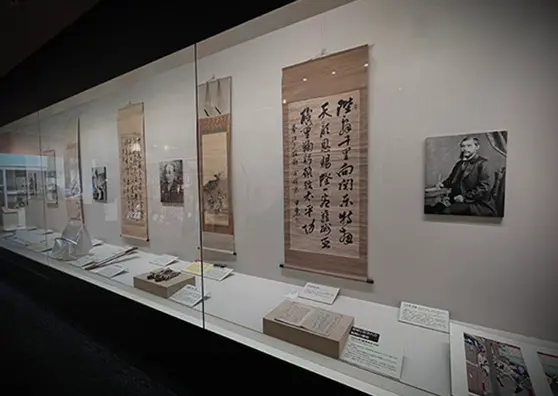
Ryozen Museum (Kyoto)
The Ryozen Museum is entirely dedicated to the history of the Bakumatsu (end of the Bakufu) and the Meiji restoration. It features a large collection of artifacts and exhibits detailing the various factions in conflict over the period.
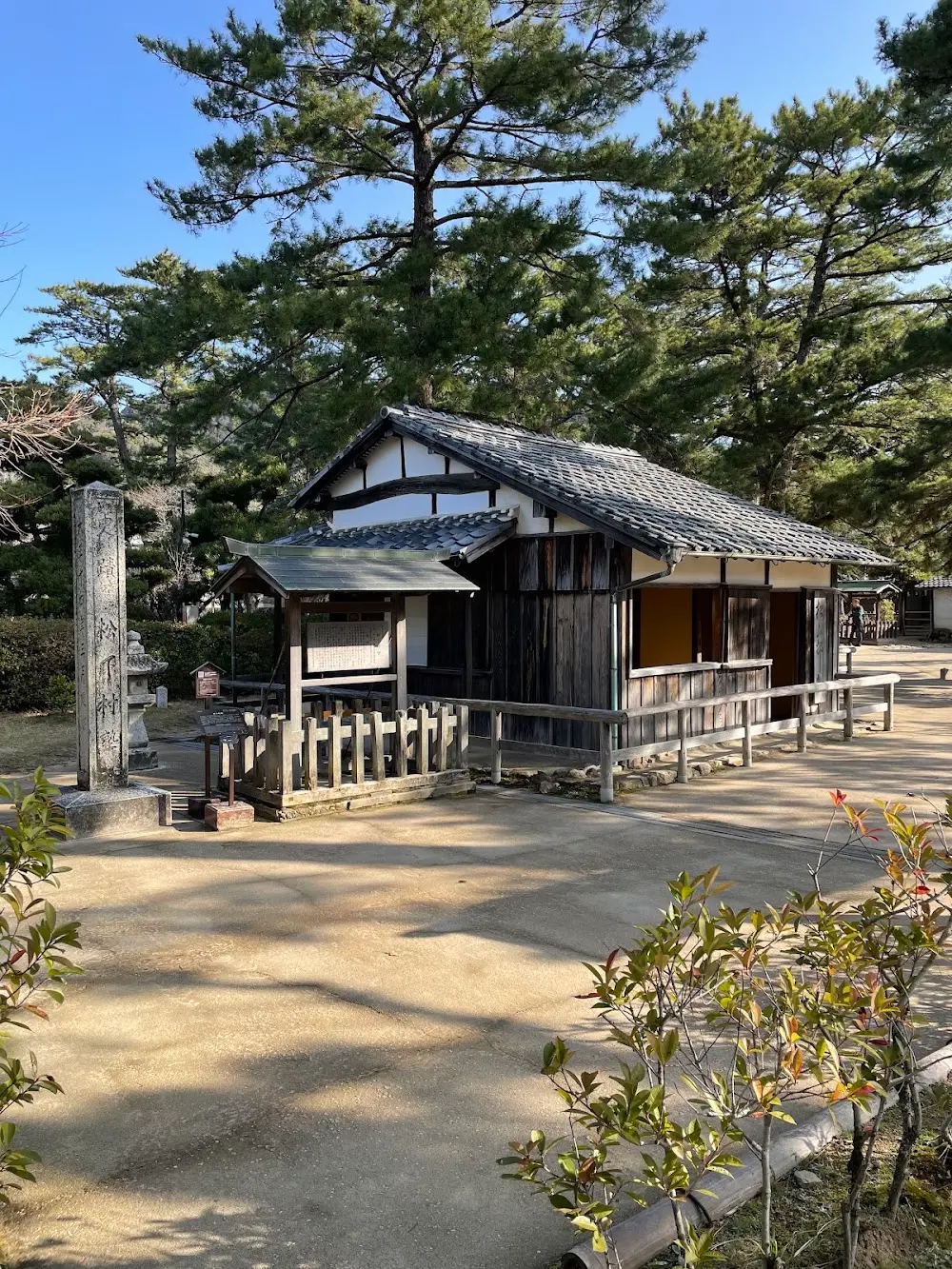
Shokason Academy (Hagi)
Further East, in the Yamaguchi Prefecture, this shrine is regarded as one of the intellectual birthplaces of the revolution. Many of the young radicals who would go on to shape modern Japan were educated here.
The Meiji Modernization (1870 - 1900)
New Government
The period from the 1870s to the 1900s is traditionally recognized worldwide as the Second Industrial Revolution. This was an era of intense technological, social, and political change. Improvements in steel production, electrification, and petroleum usage developed alongside communication advances, such as the telegraph and telephone, and the invention of more efficient processing methods. Interchangeable parts, the assembly line, advanced railway systems, and corporate bureaucracy combined to unlock previously unfathomable economic gains.
Japan’s modernization, however, differed from the European experience. In Europe, a new wealthy class of urban bourgeoisie challenged the old guard; in Japan, it was the old guard—the samurai class itself—that pushed for drastic social change.
After the fall of the Tokugawa shogunate, the new political leaders moved quickly to consolidate their authority and remake the country under Western influence. There was significant frustration with the old political system, as well as a great fear of the foreign Western powers that pressured the country’s sovereignty. The 260-year-old daimyo system of semi-feudal lords was completely overhauled in just three years.
Perhaps surprisingly, this process was not dominated by violence, though such drastic change is almost always accompanied by some level of conflict. A key move by the new government was convincing select influential daimyo to return their land to the Emperor. In return, they were promised a seat in the new political administration and a generous government salary. Most daimyo accepted the deal, setting a precedent that the rest of the country’s lords followed within a year.
The structure of the government remained fluid for the first few years of the Meiji era before eventually settling into a European-style parliament with a Prime Minister and a cabinet system. Importantly, the entire government was framed as subservient to the Emperor. This system promoted the legitimacy of the new regime by leveraging Tokugawa ideals of duty and loyalty while claiming authority through the Emperor’s divine right to rule.
Social Order
The other major change during this time was the revolution of the social class system that had defined the Tokugawa era for nearly three centuries. Only a few years after the daimyo had forfeited their land, the government deemed the regular samurai stipends too expensive to maintain, as they consumed roughly half of all government revenue.
To decrease this annual obligation, the government passed several consecutive laws that effectively signaled the end of the samurai class.
First, the many layers of samurai rank were consolidated. The entire class was stratified into two subclasses: upper samurai and lower samurai. All others were reclassified as commoners. Shortly after, the government mandated that these stipends be taxed. By taxing its own payments, the government essentially reduced its total expenditure. Following this, in 1876, it became compulsory for all samurai to convert their right to a stipend into government bonds. While ruinous for many individuals, this was liberating for the state.
The stipends, which were inheritable and adjusted for inflation, represented a perpetual “dead weight” on the country’s finances. Converting them to bonds achieved two key outcomes:
-
It converted a perpetuity into an annuity: What was once a never-ending liability became a debt with a fixed end date.
-
It allowed the government to reduce the obligation via inflation: Because the payments on the bonds were fixed, inflation reduced the real value of the debt over time.
Finally, the samurai were forbidden from carrying their swords in public—the very items that represented their social status.
Unsurprisingly, these changes were unpopular among the old-guard samurai. Simultaneously, increased literacy rates and rising levels of political involvement among the general public led to frequent criticisms of the government and popular unrest.
Economic, & Cultural Transformations
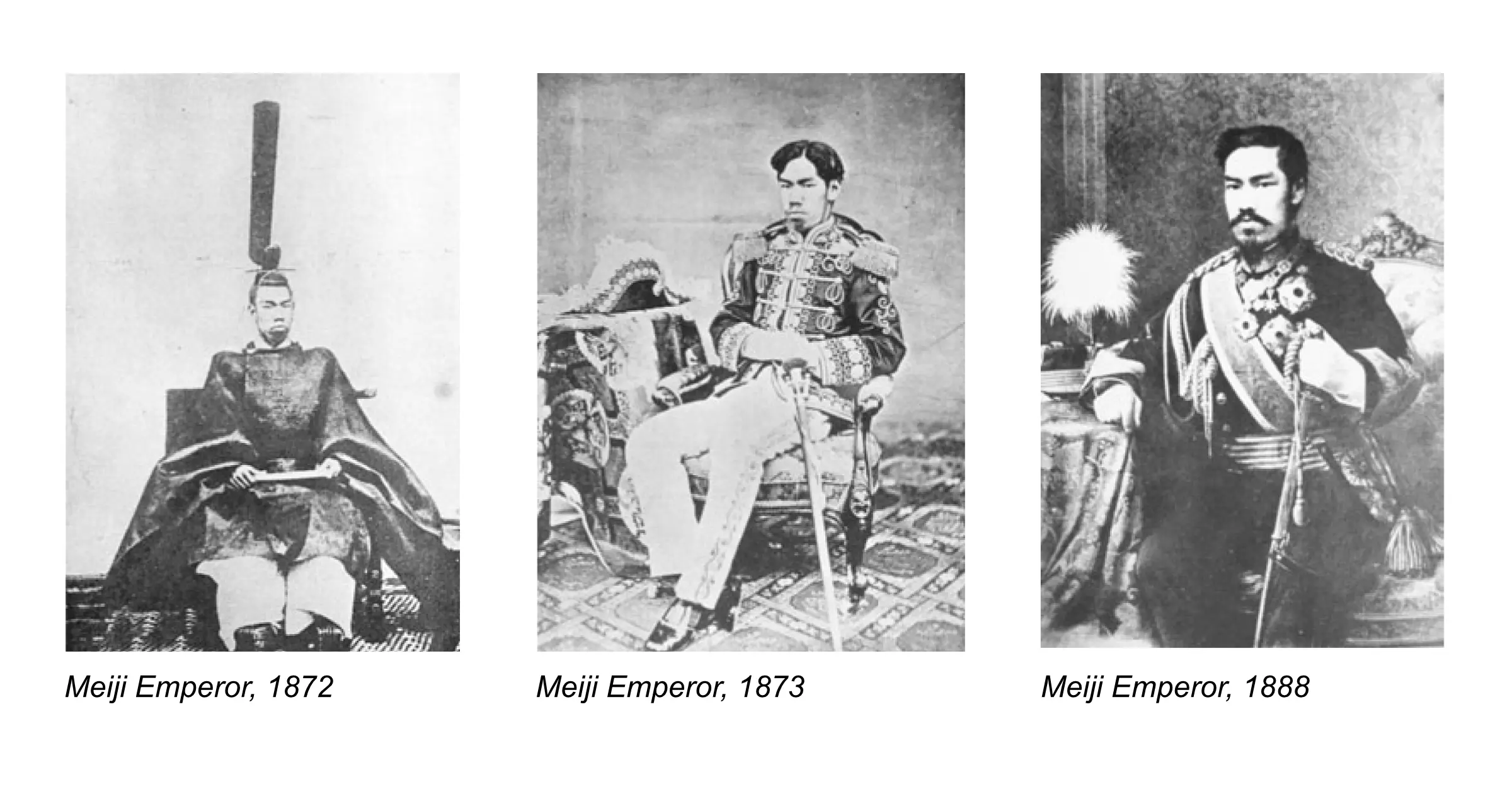
Facing internal pressure and external geopolitical threats, the Meiji government viewed rapid modernization—which it equated with Westernization—as the best way to solidify its authority at home and project strength internationally.
The image below demonstrates the Westernization of Japanese authority through the Emperor’s dress and stature as depicted in imperial imagery.
The Dark Valley - The End of Democracy (1900 - 1930)
Background
The Meiji emperor was a titanic figure in the political and religious worlds of both the government and the public. He benefitted from the shifting politics of the early Meiji era, with the new government promoting his divinity in order to secure their own authority. However, he was also a strong leader, overseeing one of the most rapid and transformational modernizations in history as Japan went from a frozen time capsule of the middle ages to a leading industrialized nation in just a few decades.
His son, Yoshihito, was not nearly as capable as his father. He had suffered from meningitis as a child and by 1919, only 7 years after inheriting the throne, he was already beginning to struggle upholding his responsibilities. By 1921, rumours swirled throughout the nation that his mental state was deteriorating.
Beyond the issues at home, the global context at the time was one of imperial hostility. The German Kaiser had been exiled, the Russian Tsar executed. With pressure high, it was not long until he was forcibly stripped of his duties with Crown Prince Hirohito in place as regent. In a time of global turmoil for imperial dynasties, the Japanese monarchy was weak and a political vacuum for party politicians was beginning to crack open.
Imperial Democracy
Interestingly, without a strongman figurehead, the Taisho era actually became the most liberal society ever seen in Japan until that point. Historians describe the politics of the era with the paradoxical term “Imperial Democracy.”
Like much of the modernizing process that Japan experienced in the century prior, it was inspired by the great powers of Europe. Japanese politicians looked to England and the Netherlands and saw nations where the citizens had freedoms and the right to participate in politics, but also an imperial family and military that gave them power on the world stage.
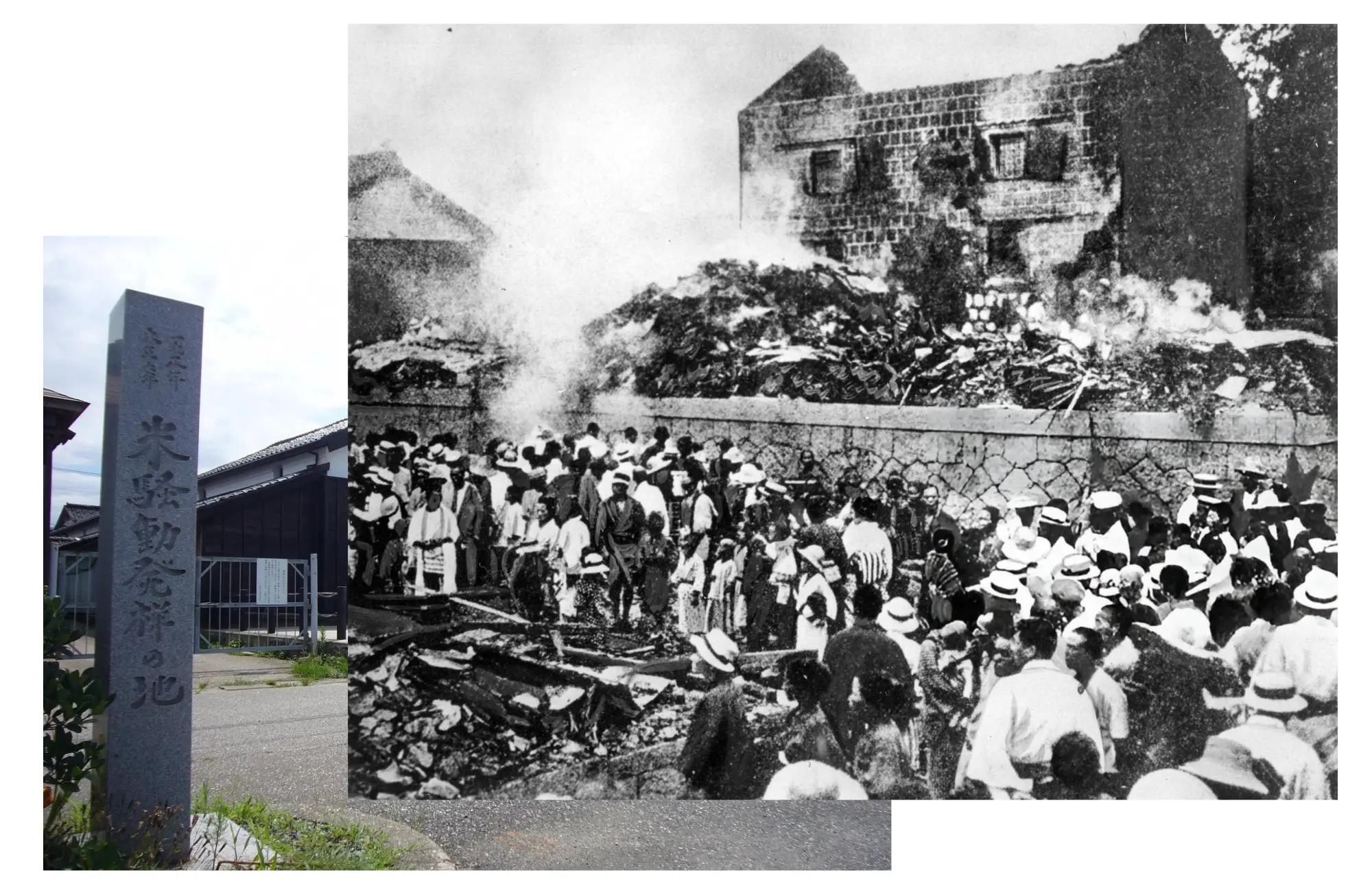
The system of Imperial Democracy, however, was not arrived at smoothly. In 1918, some of the most violent and widespread protests erupted across the nation. World War I was still raging, and the economics of war led to severe inflation on fundamental staples for the Japanese. The price of rice, for example, doubled in just a single year.
The level of unrest reached a level unseen before by the Japanese elites. They realized that if the politics didn’t change, they would face revolution. Hara Kei, a party politician and man with no title, was appointed Prime Minister to calm the riots. His strategy was to essentially just buy votes. He went to the elites and people of every constituency and promised massive infrastructure investment if they voted for him.
Now, while effective at winning votes and settling the public, this strategy also set in place a system of massive corruption. To fund the local infrastructure investment, Hara Kei also had to make massive promises and concessions to the Zaibatsu—the massive conglomerate corporations like Mitsubishi that dominated the Japanese markets. The government was essentially captured by corporate interests. The Zaibatsu funded the politicians, who in turn built the infrastructure used by the corporations to further their growth and dominance, and the cycle repeated.
Communism and Crack Down
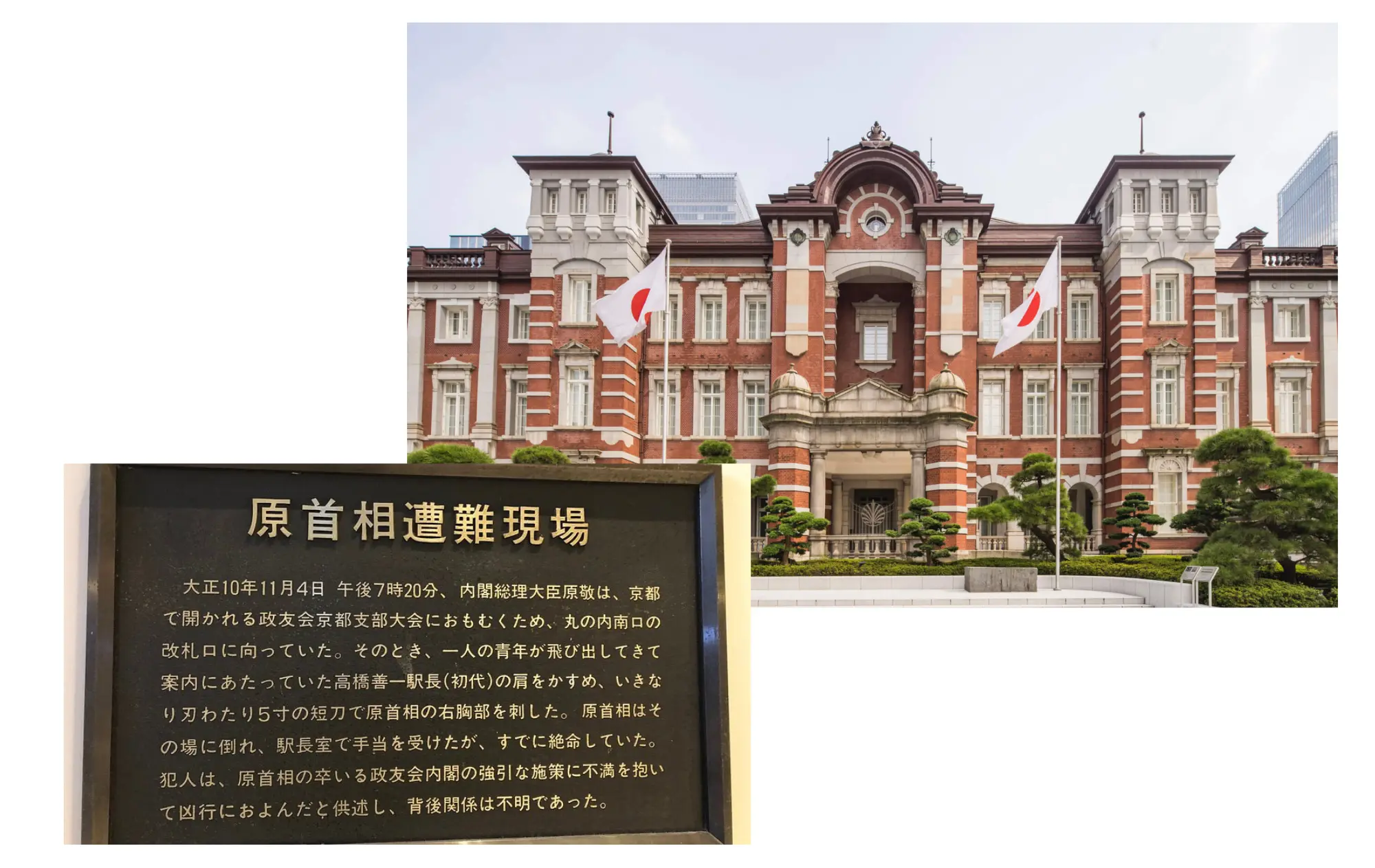
While Hara Kei’s methods worked for a while, in the end, the corruption only stoked the common people’s frustrations further. In 1921, a right-wing railway switchman assassinated Hara Kei, stabbing him at a train station. Left-wing labor strikes and tenant disputes also skyrocketed. The Japan Communist Party was formed illegally, and union leaders rallied for the entire destruction of the existing social order. The politicians were terrified.
In an attempt to release some pressure, liberal, democratic legislation was passed to expand the voting population. Voting was opened to all men over 25, and overnight the electorate jumped from approximately 3 million people to almost 12.5 million.
At the same time, though, the leftist movements pushed the government much further toward right-wing authoritarianism. Laws were passed that criminalized criticism of the Emperor or private property rights, with penalties ranging from death to 10 years in prison. By 1928, crackdowns occurred across the country. Thousands of arrests were made, and a special police force was established to monitor all political meetings to ensure any dissenting thought toward the government was shut down.
Global Conflict
In 1910, Japan annexed Korea. Then, throughout World War I, Japan fought on the side of the British and the Americans. This was not out of loyalty or moralistic duty, but rather opportunistic pragmatism. With Germany weakened, Japan used the conflict to seize German landholdings in mainland China.
But while the Japanese had fought alongside the Americans in the war and cooperated afterward to establish new military and economic treaties, the Americans also passed laws that deeply insulted the Japanese government. The US Immigration Act, in particular, banned all Japanese immigration to the US. The Japanese saw this as a betrayal, and the anger fueled the right-wing arguments for Japan to build its own Pan-Asian empire.
The result was a distinct shift toward what is called “autonomous imperialism.” Systemically, the Meiji Constitution was flawed. While the politicians theoretically answered to the vote of the people, the military was independent of the parliament and answered directly to the Emperor. This meant that they could more or less operate outside of the political system, and over the decades of the first half of the 20th century, they made several attempts at imperial expansion throughout Asia.
Eventually, this system spiraled out of control. Attempting to take more land in China, the army murdered Zhang Zuolin, a Chinese warlord, which led to chaos in the mainland colonies. In conflict with the government, the military then simply refused to be accountable for its actions. The government had effectively lost control of its own military.
Finally, in 1929, the Great Depression hit. The common people suffered greatly. All faith in Western-style politics and economics was lost. Without public support, the government—already broadly seen as corrupt and ineffective—lost what authority it had left. The military stepped in, promising safety and protection by taking what was needed from the rest of the world by force. In just a few years, the experiment of democracy in Japan fell apart.
Tourism
Tokyo Station Marunouchi Building (Tokyo)
The south exit of the Tokyo Station Murunouchi Building contains a plaque that marks the exact spot where Prime Minister Hara Kei was assassinated in 1921.
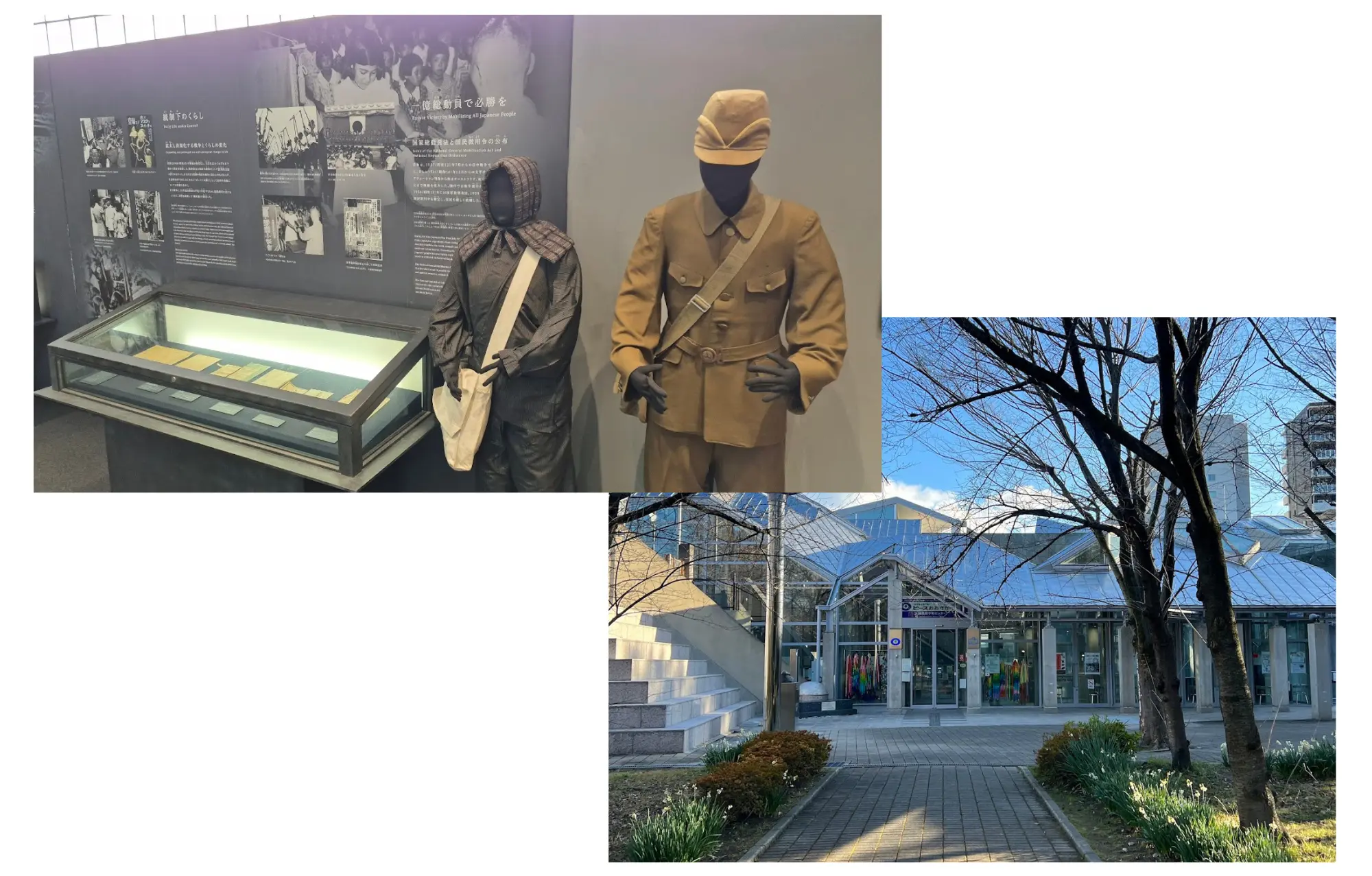
Peace Osaka (Osaka)
Many museums across Japan focus on the damage that was done to Japan. Peace Osaka focuses on the damage done by Japan to both the outer world and to its own people. Exhibits include the “Peace Preservation Law” and the Tokko who were the special police force used to arrest and monitor thousands of left-wing protestors.
Birthplace of Rice Riots (Uozu)
In the small town of Uozu a small memorial can be found marking the birthplace of the rice riots in 1918. Started by a small group of fisherman wives, the riots spread across the country and led to the appointing of Hara Kei as Prime Minister.