Summary
Value investors have missed many of the best businesses of the 21st century, and our toolset needs to change if we want to understand why. The advantages of digital businesses, namely their ability to scale globally with speed and minimal capital investment, produce GAAP-induced illusions on the income statement that our valuations need to take into account. If an investor makes these adjustments in a thoughtful and rigorous manner, they can quantify the advantages of digital businesses and more reliably find those the market undervalues, as long as the adjustments don’t become an excuse to skip the margin of safety Graham taught us.
Takeaways
Since 2006, Amazon’s stock is up ~12,600%, while the S&P500 is up only ~440%.
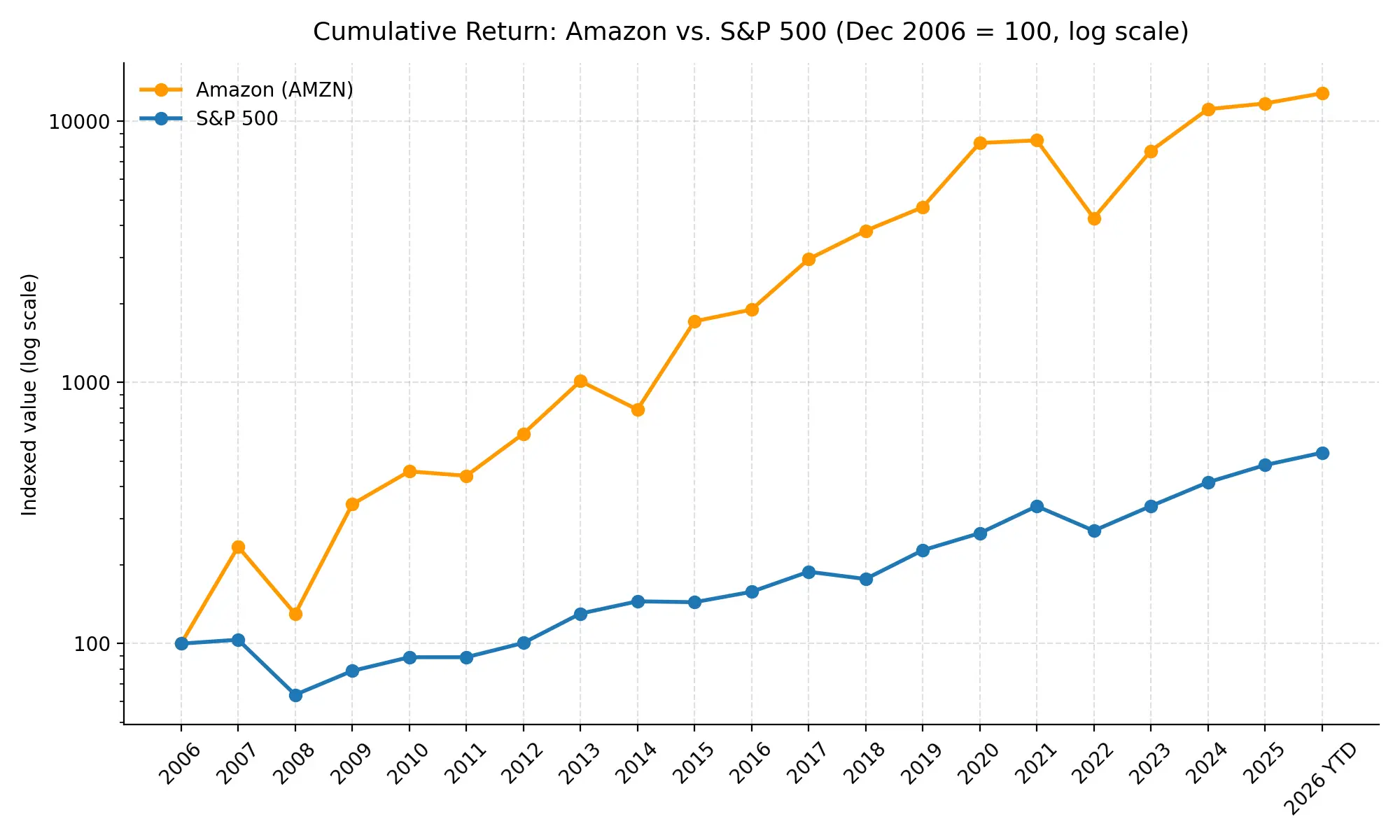
Yet for most value investors, ever looking for a bargain, or at least a fair price, the stock has always looked like one to avoid. Amazon’s P/E ratio has been above thirty since 2006. When you include years with near-zero or negative earnings, the ratio becomes even more extreme. In fact, Amazon’s average valuation has been about ten times more expensive than the S&P500’s for thirty years.
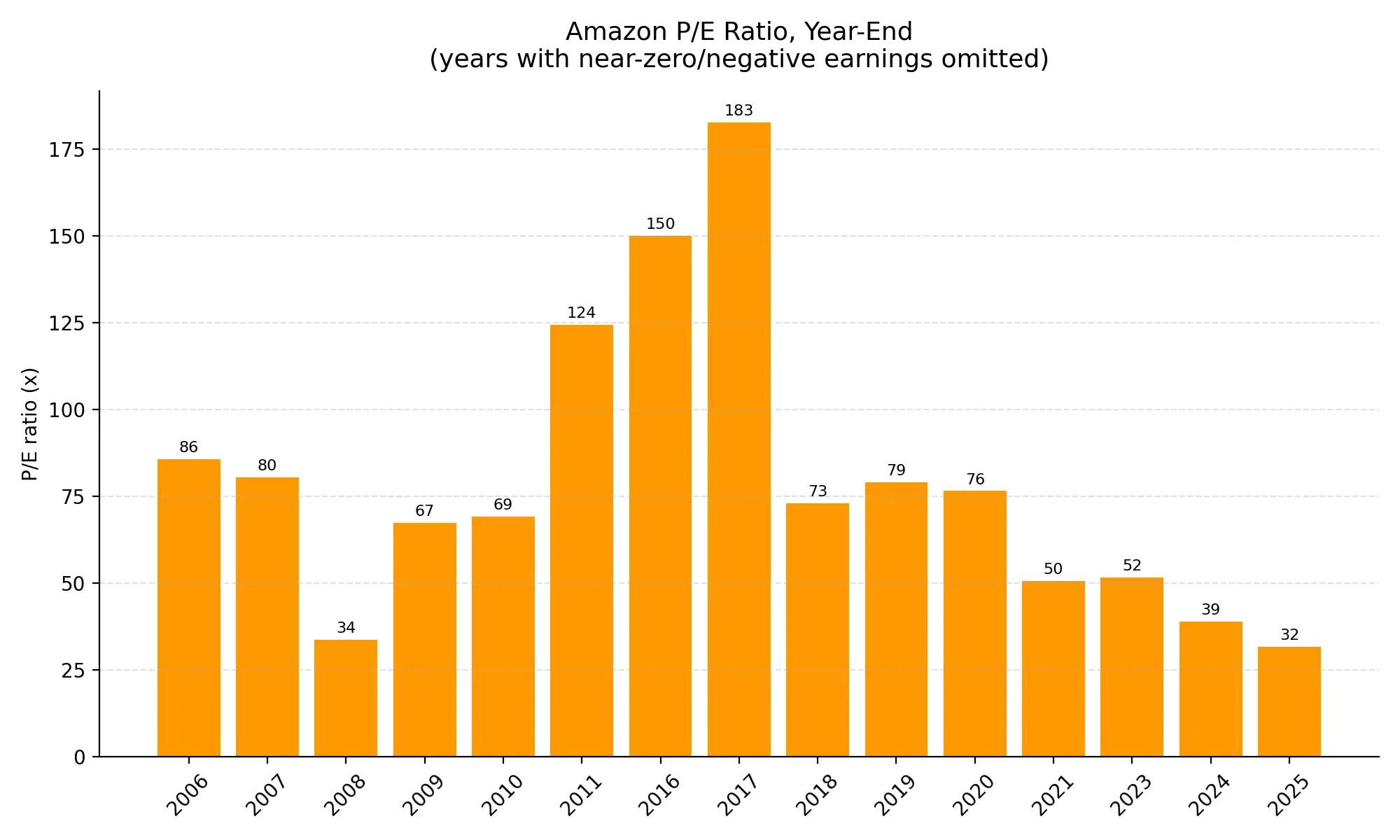
Other metrics favoured by so-called “intelligent investors” have told a similar story. GAAP profits and returns on invested capital have been negative many times in Amazon’s history.
After two decades of watching Amazon compound without them, any honest Warren Buffett disciple has to ask themselves where they went wrong. After all, Jeff Bezos himself is a massive fan of Buffett and has frequently discussed concepts familiar to value investors in his annual letters to shareholders. With hindsight, it is perfectly clear that Amazon was a value play all along, and Bezos, along with those who saw it, reaped massive rewards.
But how did they know? Sophisticated investors don’t gamble. They don’t just throw money at the next new technology or hot stock. They are thoughtful and systematic. The problem is that the traditional system taught to investors by Ben Graham, Buffett, and Munger didn’t work for one of the best companies that has ever existed. It didn’t work for Google or Microsoft either. In fact, most digital businesses have looked too expensive for value investors their entire lives, while they have continued to carry much of the market’s growth.
Is this the end of the discipline that has brought so many investors enormous wealth, or does the toolbox just need an overhaul?
This is the question Adam Seessel raises in his book Where The Money Is, and he suspects the answer is the latter. How did Bezos so successfully steer the ship of Amazon for thirty years despite many of the common indicators flashing red? And what can investors who want to keep the core tenets of value investing alive do to thrive in what has come to be known as Value 3.0, value investing in the digital age?
Why Value 2.0 Broke
To understand why Value 2.0 broke, it helps to first see why it was born. Ben Graham founded the concept of value investing in the first half of the twentieth century. The idea was simple: buy securities for less than they are worth. He devised a quantitative, reproducible system for getting rich in the stock market by hunting for the ugliest, most hated businesses that were trading at prices less than the value of their net assets. He figured that this was as clear a mispricing as you could get and near impossible to lose money on. He was right, and for a long time he and his disciples were able to grind out profits in the market by buying what Warren Buffett calls “cigar butt” companies. These are businesses that are effectively one-hit profit producers. You buy them for less than they are worth and you sell them when the market inevitably reprices.
Buffett himself, the high priest of Value 2.0, got rich doing this as well. However, at some point, the technique stopped working. It was a difficult method to scale because it was a challenging and tedious process. Every successful trade produced a little bit of profit and had no lasting wealth enhancing effects beyond the trade itself. Once you made enough money from the methodology, there simply weren’t enough additional opportunities redeploy it and keep it growing. Simultaneously, as more people entered the market and technology made information more abundant, the market became more efficient. You’d be hard pressed to find many cigar butt opportunities today.
In the early 1970s, under the influence of Charlie Munger, Buffett realized there was another way to invest. A better way. It was still rigorous and disciplined, but it also solved the issues with Ben Graham’s approach. In Buffett’s words, instead of finding cigar butts, they started buying wonderful businesses at fair prices. What he meant by this was that some businesses, like See’s Candies, Coca-Cola, or GEICO, had such excellent unit economics, growth prospects, and durable competitive advantages that they would earn back their higher valuations relatively quickly. From there, the rest of their growth and cash generation was pure profit for the owner.
The world had changed, and the methodology an intelligent investor used had to change too. With his new framework, Buffett became, at one point, the richest person in the world. Yet, the foundational principles taught by Ben Graham remained:
- The market exists to serve you, not to guide you.
- Buying a stock is buying a business, not a lottery ticket.
- Applying a margin of safety protects you from being wrong.
This was still value investing. This new approach was still buying a business for less than it is worth. It was just measuring opportunities with different tools. It is what has become known as Value 2.0. An entire essay or book could be written on the methodology, but in short, it consisted of qualitatively assessing the competitive advantages a business has, its growth prospects, management’s ability, and then paying a low price-earnings ratio for it at an opportune time.
Value 2.0 produced unfathomable wealth for the shareholders of Berkshire. Buffett and Munger spawned multiple generations of enlightened students as well. Nonetheless, the world doesn’t stop changing. Berkshire’s compounded returns have dwindled closer to the returns of the index since the late 90s. Buffett himself mostly blames Berkshire’s size, and he’s surely right that it is harder to compound hundreds of billions than a few million. But is it a coincidence that this was also around the time Bezos moved his family to Seattle and started selling books from his garage on Amazon.com?
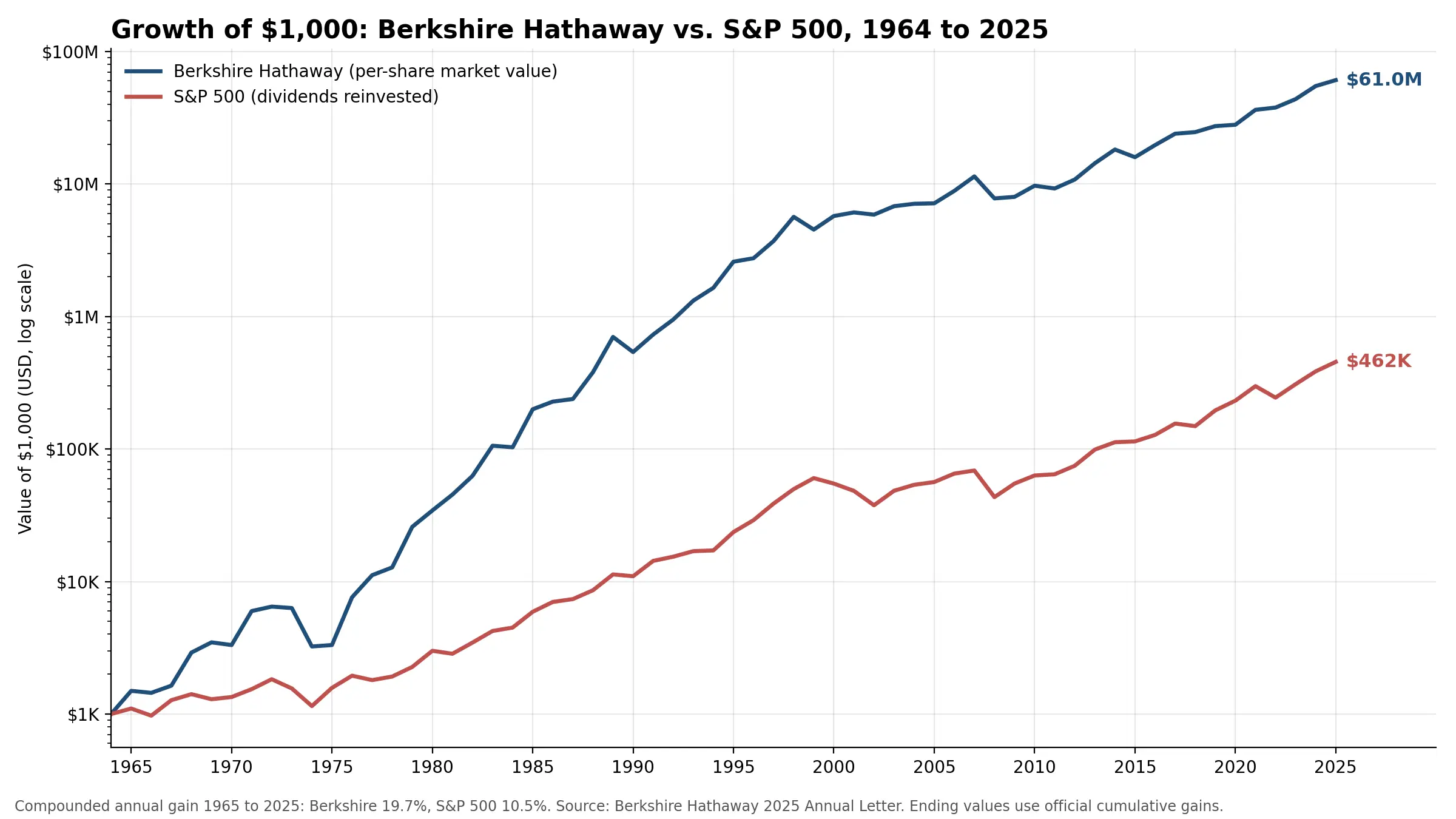
$1,000 USD invested in Berkshire Hathaway in 1964 would be worth $61 million today. The same $1,000 USD invested in the S&P500, dividends reinvested, would be worth only $462 thousand.
You can see the massive outperformance begin in the mid-1970s. You can also see the outperformance tail off with the rise of the digital age in the late 1990s.
Around the dot-com bubble, news outlets were quick to declare the internet a failed experiment, a fad. In 1999, Barron’s Jacqueline Doherty famously labelled Amazon.com “Amazon.bomb”1. I won’t retell the obvious here. Amazon was clearly not the blow-up the market thought it was. The internet did change the world, just as the market predicted in 1998. It just took a lot longer than everyone thought.
Wise as ever, Buffett and Munger avoided much of the internet-driven frenzy and subsequent pain of the dot-com era. Sticking to his core principle of only investing in his ‘circle of competence’, Buffett claimed ignorance of technology and happily stuck to the businesses he felt he could accurately assess the long-term value of. If he was going to buy a technology company, like Berkshire’s massive investment in Apple beginning in 2016, it would be at “fair” multiples. In Apple’s case that was around 12x earnings.
Yet, as I’ve mentioned, Amazon, trading at well over 100x earnings in 2016, was still a value play! Bezos knew that. Many of his investors knew that. And fundamentally, Amazon was not an extremely difficult business to understand, like, say, semiconductor manufacturing.
In fact, Amazon is not the only value play that Buffett and his disciples missed. Buffett and Munger have repeatedly kicked themselves for missing Google, a company that came across their desks when GEICO was paying for advertising on the platform in the 2000s. To paraphrase Buffett, any time you get paid whenever someone clicks a little button on their desk, you have a great business.
So, these businesses were perhaps not as hard to understand as claimed. That was not the real issue. And Amazon particularly had no issue with management either. The problem was price. Internet and technology businesses have almost always looked too expensive on a P/E basis. But what Adam Seessel argues in Where The Money Is is that this tool is broken. The internet changed the world, and the accounting rules haven’t caught up. Digital businesses have qualities that have never existed before, and under the current accounting standards, those qualities make these businesses look much more expensive than they really are. Investors in the 21st century have to change, like Buffett did in the 1970s, and incorporate their understanding of the new world into the valuation tools they use to understand the price of the businesses they are looking at. This is Value 3.0.
Value 3.0
In his 1986 letter to shareholders, Buffett defined a concept he called “owner earnings”. Berkshire had purchased a business called Scott Fetzer, and Buffett wanted to show his shareholders how the accounting rules made the acquisition look worse than it was in reality. Setting aside the nuances of the accounting, Scott Fetzer’s standalone financial statements showed higher earnings than Berkshire’s consolidated statements. The same business, in the same year, different numbers. Owner earnings, as Buffett described it, adjusted GAAP earnings to arrive at a number that better represented the excess cash the business actually produced, and that could be used to value the business fairly.
Owner Earnings Adjustments
Owner Earnings is calculated from the following components:
- (a) Reported earnings
- (b) Normalizing adjustments
- (c) Depreciation, amortization, and certain other non-cash charges
- (d) The average annual amount of capitalized expenditure for plant and equipment that the business requires to fully maintain its long-term competitive position and unit volume
- (e) Any increase in working capital required to hold that position and volume
Owner Earnings = (a) + (b) + (c) − (d) − (e)
Understand what Buffett is doing here. He is adjusting the income statement of the company to see how much cash the business would produce if it stopped trying to grow and just stayed in place. Most of those adjustments came through understanding capital expenditure.
Value 3.0, as described by Seessel, is the same concept. We want to arrive at owner earnings for digital businesses. The difference is that digital businesses don’t have material capital expenditures weighing them down. This is the first part of what has led so many value investors astray, missing businesses like Google. Applying Buffett’s adjustments to Google in the 2000s wouldn’t have changed Google’s earnings very much, and as a result, it would have still looked expensive.
What value investors missed was that the nature of digital businesses allows them to grow rapidly and go global much faster than any kind of business before them. Software companies, like Microsoft, could launch in America and Europe on the same day with almost no extra work or spending required. This means that the money they save on capex can instead be allocated to marketing and sales, accelerating their growth even further. What’s more, acquiring a customer actually creates a long-term relationship. It’s not the same as a shopper grabbing a can of soup off a shelf. Software is often a pseudo-necessary tool in people’s lives or work, and users usually stick with digital products for years. Conceptually then, some portion of sales and marketing costs create an intangible asset with a life of multiple years, which should be capitalized to the balance sheet, rather than expensed immediately as GAAP rules demand. Depending on the business, this alone can make it appear much more expensive than it really is.
Finally, many digital businesses spend constantly on research and development to improve their products. GAAP accounting requires this to also be expensed immediately rather than capitalized. But for businesses with proven product-market fit, this spending is generally a lot closer to development than research. An example is what Adobe spends to add a new feature to its product suite.
In the book Seessel walks through the example below, adjusting Intuit, the company behind TurboTax and QuickBooks, so that its cost structure resembles a similar-sized mature company like Campbell’s. He arrives at a valuation much cheaper than Intuit appeared at the time the book was published.
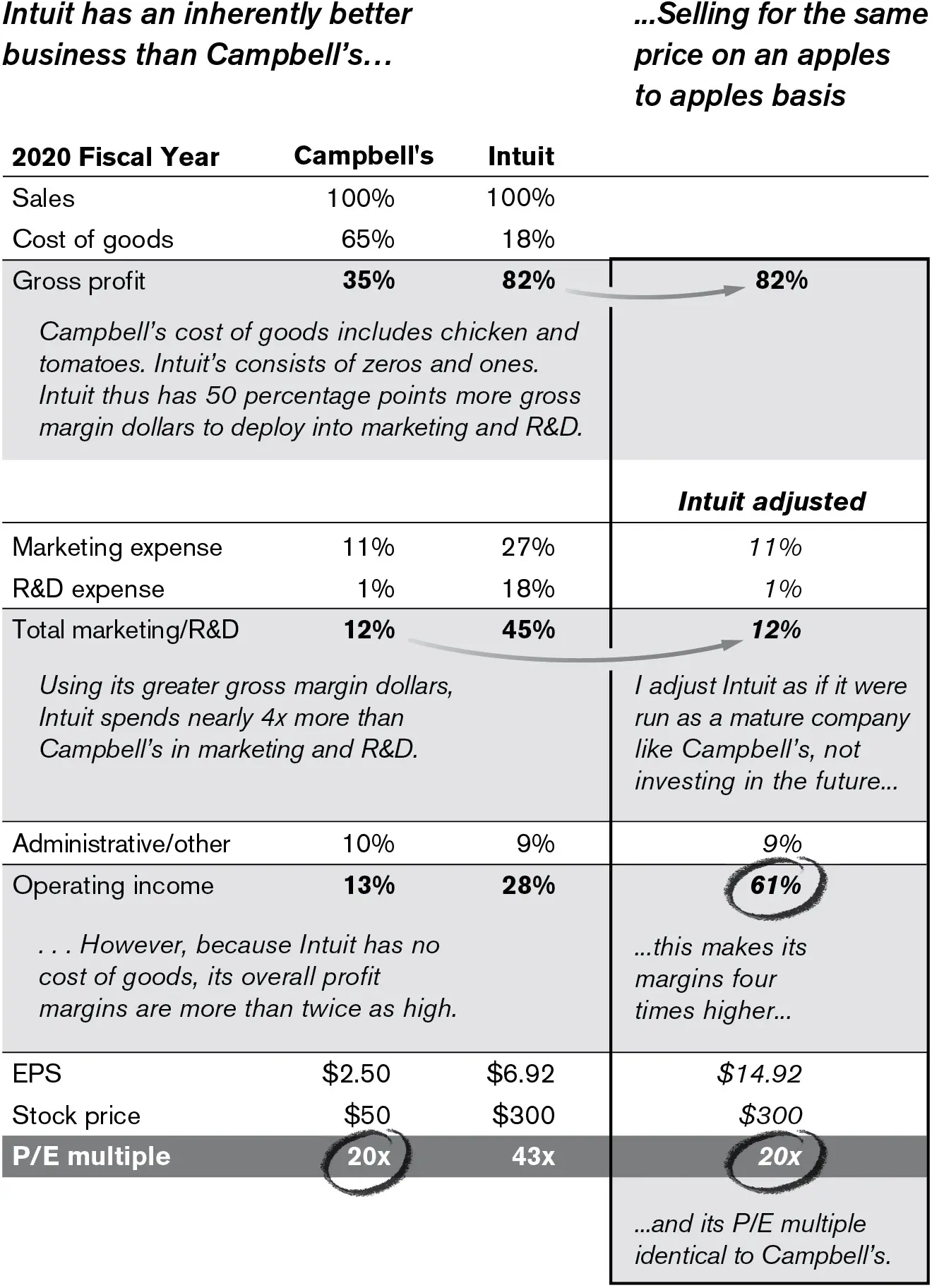
I have to add that I slightly disagree with Seessel here. The tech industry, software particularly, is extremely competitive. The brilliant economics of software are not a secret. Everyone knows it is the best business model. I think it is therefore naive to assume Intuit’s R&D expense could ever look like that of Campbell’s. Perhaps the nature of the industry requires ongoing development just to stay competitive. I think, just as Buffett described the difference between maintenance capex and growth capex, we should consider the idea that digital businesses require maintenance R&D representing the security updates, data maintenance, and even new feature development required not to lose ground to new products. Furthermore, while I think this has always been true, it is even clearer with the recent “Saaspocalypse” spurred by fears around AI disruption. How much R&D will these businesses need to spend to keep their feature sets competitive against new AI-built products? And will this race ever end? I doubt it. So, if we truly want to get to the bottom of how much free cash a business produces while just holding its market share, some of this R&D should be capitalized, but not all of it.
I also have to disagree with Seessel on his Amazon point. Between its network of warehouses, vehicle fleets, and physical stores, Amazon is in many ways closer to a traditional Value 2.0 business than a digital one. As a deliberately built culture of innovators, Amazon has also spent significant amounts of shareholder capital on initiatives that failed, such as the Fire Phone. That’s okay for most shareholders, since you know you’re paying for innovation and failure when you buy Amazon, but it’s flatly incorrect to wash away all of Amazon’s R&D because it is “digital”.
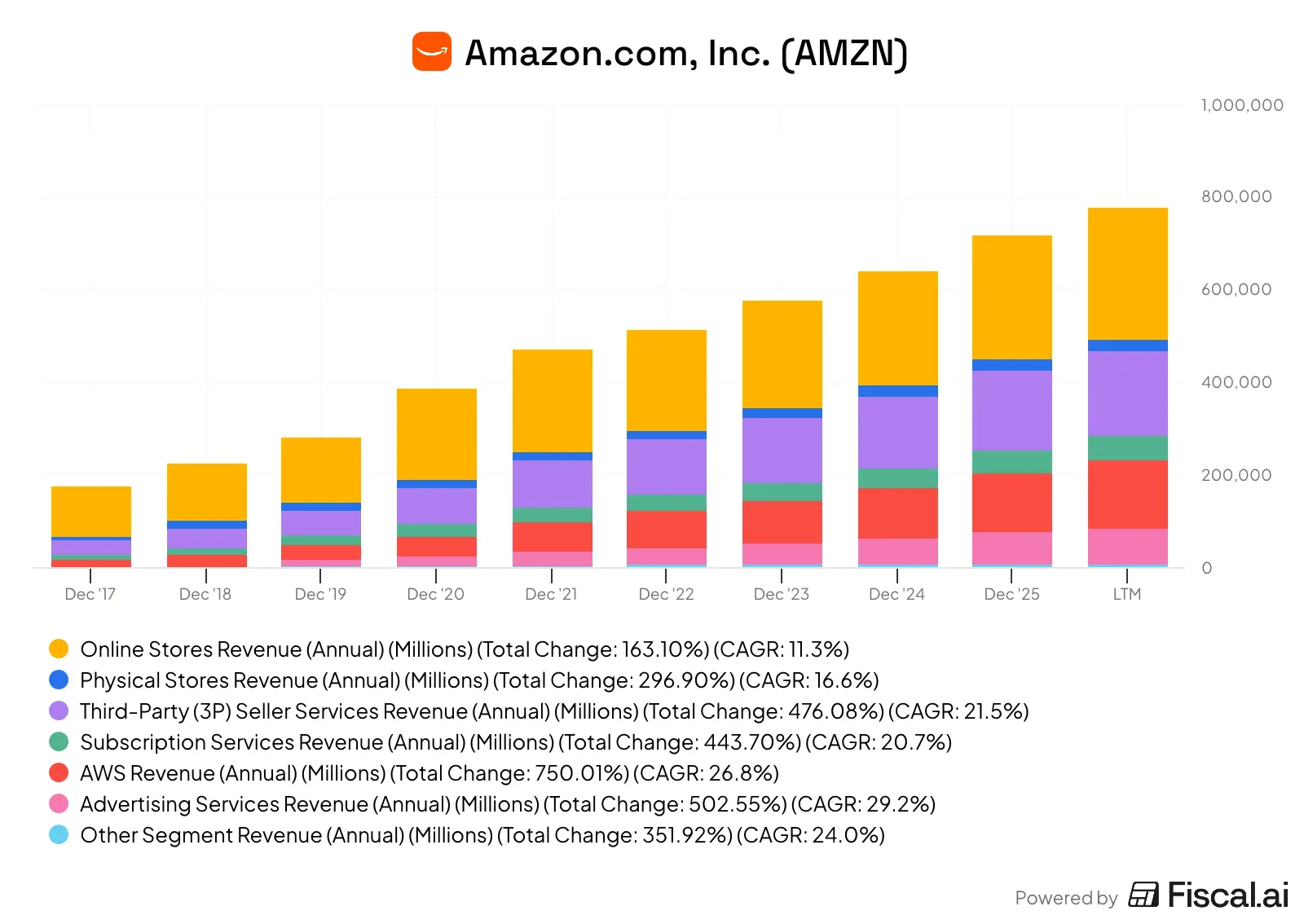
I completely agree with Seessel’s main point: physical businesses pass growth spending through the balance sheet, digital businesses pass it through the income statement, and value investors need to adjust for that. I simply add the caution that the adjustments an analyst should make are not as simple as Seessel makes them seem in the book, and his are frankly overly aggressive. Adjustments need to be made thoughtfully and after truly studying and understanding each business. Nonetheless, the broader point is extremely valuable and the entire framework laid out by Seessel is worth knowing.
The BMP Framework
Seessel’s BMP framework stands for Business-Management-Price. These are effectively the same things Buffett looked for in Value 2.0, but structured in a checklist-style worksheet that any analyst can follow.
Business Quality
The first task for the analyst is to understand the business. Particularly, the analyst needs to understand whether the business is growing, and how long a runway it has in front of it. I’ve added some sub-questions to Seessel’s question to help answer it. Note that answers to these questions may or may not be provided by management in their disclosures, investor presentations, or earnings calls. Regardless, you should treat management’s assessment with a grain of salt and use your own judgement to form an opinion.
- Does the company have a low market share of a large and growing market? (Yes/No)
- How big is the TAM (total addressable market)?
- How fast is the market growing?
- Is the market growing because of demographic or secular trends, or is it cyclical and likely to reverse?
- What is the company’s estimated marketshare?
- Is the company’s marketshare growing? I.e. Is revenue growing faster than the market?
The second question relates to the durability of the business over decades. All businesses die at some point. If you are performing a discounted cash flow, this stage is effectively assessing the terminal growth rate of the business, which, importantly, often represents 40-70% of a business’s worth.
- Does the business have a sustainable competitive advantage i.e. moat? (Yes/No)
- Does the business have network effects, i.e. do more users directly make the product more valuable to each incremental user?
- Does the business produce switching costs for the customer, i.e. does the pain of switching outweigh the benefits a competitor offers?
- Does the business have cost advantages, i.e., access to resources, scale economics, or geographic advantages?
- Does the business have intangible assets with long lived characteristics i.e., brand, patents, licenses, or proprietary data?
- Does the industry have efficient scale benefits? Some industries are just too small for multiple players to operate, but can be profitable for one business to serve.
- Does counter-positioning exist? This is where competitors can see the threat a business produces, but cannot respond without jeopardizing their own existing business.
There are more types of moats than this, but these are some of the most common. Note that if you are looking for a moat, it can be easy to find one that doesn’t actually exist. My advice is to instead go through each type of moat and try to disprove it, rather than prove it. That usually provides a more honest outcome than the alternative. In Munger’s words: invert, always invert.
Management Quality
The second segment of Seessel’s framework is to assess the quality of management. As I get more experienced, and think more about businesses and investing, I become increasingly focused on this segment as the most important part. Ultimately, we are looking for CEOs and management teams that understand what drives business value over the long term. That is cash flow, not revenue growth, GAAP earnings, “adjusted earnings”, or EBITDA.
- Do the executives understand what drives business value? (Yes/No)
- Does management measure and report metrics that map to true economic earnings, rather than metrics chosen because they flatter the number?
- Does management talk about ROIC, durability, and reinvestment opportunity in a way that shows they understand where value comes from?
- Do actual historical decisions follow what is discussed in the above questions?
- How do managers behave in their day-to-day activities? For example, do they make business trips alone, or with a full team? Do they fly first class and stay at fancy hotels, bought on the company card, or, if they do these things, are the upgrades paid for with their own money?
Cash flow is the goal, and return on capital is how you measure whether management is getting there efficiently. It tells you how much cash the business earns on every dollar put into it, which is why it is the most important metric for any business. You’d be surprised how many CEOs fail to understand this. Others will say all the right things and act in the opposite manner. The best way to assess how management thinks and acts is to study their past behaviour.
- Does management think and act like owners? (Yes/No)
- Does management hold meaningful personal equity, ideally bought with their own cash rather than just granted?
- Is capital returned or deployed on terms a rational owner would accept? (buybacks bought at lows, disciplined deal pricing)
- Is compensation tied to per-share value creation rather than size, revenue, or adjusted profit metrics that are easy to inflate?
Here we are assessing the alignment between what shareholders want and what management wants. Compensation plans and proxy statements are often exceedingly long and convoluted. What matters is that you as the investor understand what drives business value and that management is incentivized to achieve the same outcome.
One other important point I want to make here is that you will often find great businesses with strong moats and as a result, pricing power. Some businesses though will abuse this position, frequently raising prices and squeezing money out of their customers without offering any improvements to their product or service in return. This is a management choice, and while it will look good in the short term as margins expand, it is often destructive to value in the long term. We want businesses with products or services that are beloved by their customers, who happily hand over their money rather than resent it.
Price
Price is the final component of Seessel’s framework. For him it is the most important and has veto power. That is, if his adjusted valuation does not result in at least a 5% earnings yield (equivalent to a P/E ratio of 20x), he passes, perhaps adding the business to his watch list. One thing to point out is that since this book was published, 10-year US Treasury yields, and with them, interest rates, have risen considerably. Without getting into the technical details, US-centric investors can now earn a much better risk-free return than when the book was written, which makes stocks relatively less attractive. In theory, this raises the yield (or lowers the P/E ratio) the framework should require.
Seessel’s pricing process works in five steps:
- Start with 2 or 3 year forward revenue. As discussed above, these businesses are able to grow so much faster than physical businesses. If you’re trying to assess the ability for a business to earn in the future, trailing revenues punish the business valuation in a meaningful way.
- Make standard adjustments for one-time costs, maintenance capex, and future costs found on the balance sheet, as described above.
- Break the business down by reported segments, as much as possible. This allows for more precise adjustments in the next step.
- Try to estimate segment operating margins by finding comparable businesses. For example, using eBay to estimate Amazon’s marketplace margins.
- Assess the income statement for line items where GAAP obscures owner earnings. For tech businesses, these are often R&D and sales and marketing expenses. I’ve provided my opinion on this above, but the extent to which an analyst capitalizes or removes these costs is at their own judgement.
This is where I think the framework is weakest. Any student of Ben Graham will know that one of the most important principles in investing is using a margin of safety (leaving a gap between your honest valuation and your purchase price) to protect against downside risk. I don’t feel Seessel does that. In fact, in many cases it seems he does the opposite, adjusting the earnings of these tech businesses to justify the high cost rather than honestly assess it. The 20x veto helps, but it is applied to earnings that have already been adjusted upward, so the protection is smaller than it looks.
Patience Is Still The Discipline
This is an excellent book, and I recommend it to anyone who has found this post interesting. My following thoughts shouldn’t take away from what the book gets right. Yet, I do believe Seessel is overly aggressive in his framework, not just in his adjustments, but also on a more fundamental level: something I felt throughout the book.
First, I’m not sure this approach deserves the Value 3.0 moniker. Seessel’s framework is nice because it focuses on what matters and solves a particular mistake that value investors have made for many years. But Buffett’s shift from Graham was more profound. It changed what he bought, from cheap assets to wonderful businesses. Seessel’s shift changes how we measure the earnings of those same wonderful businesses. It is still great businesses at a fair price. We have just changed the lens we use to spot them. Maybe that is Value 3.0, maybe it is Value 2.5. It’s semantics.
What concerns me more is that the framework feels like it is designed for speed, not quality. Applying Campbell’s R&D percentage of revenue to Intuit is a shortcut, and it happens to be one that makes the business look cheap enough to buy. Moving slower, by studying a business until you can separate its growth R&D from its maintenance R&D, applying a margin of safety, and having the discipline to wait if it’s still too expensive, is tedious and less satisfying, but produces a more honest result.
Unlike in business, speed in investing is not necessarily an advantage. Missing an opportunity, missing Amazon, is okay. But we should learn from missing Amazon by fixing our tools, not by rushing to make sure we never miss the next one. We are riding the exponential curve of economic growth. There are and will be more opportunities in the market. What’s more important is not losing money and staying in the game. Staying on the exponential. There is no rush. Desperation leads to failure.
There are also no rules for how much work is enough. Seessel’s checklist can be too quick, yet I’ve heard others recommend that you should read every report a company has ever published. For most businesses, that is more than you need. The right amount of work is whatever it takes to understand the business like an owner and have conviction in the decision.
Patience is still the discipline, and that hasn’t changed since Ben Graham endowed us with his teachings. I’ll end with a passage from another book, Zen and the Art of Motorcycle Maintenance by Robert Pirsig, written as he and his son travel through the mountains of Montana.
Mountains should be climbed with as little effort as possible and without desire. The reality of your own nature should determine the speed. If you become restless, speed up. If you become winded, slow down. You climb the mountain in an equilibrium between restlessness and exhaustion. Then, when you’re no longer thinking ahead, each footstep isn’t just a means to an end but a unique event in itself. This leaf has jagged edges. This rock looks loose. From this place the snow is less visible, even though closer. These are things you should notice anyway. To live only for some future goal is shallow. It’s the sides of the mountain which sustain life, not the top. Here’s where things grow.
Notes
Value Investing Requires A Paradigm Shift In The 21st Century
There Are No Deadlines In Investing
Investing Is A Qualitative, Not Quantitative, Game
Marketshare and Runway Separate A Cash Cow From A Compounder
Management Must Show That They Understand What Creates Value
Adam Seessel’s BMP Framework (Expanded)
The Difference Between Value 2-0 and Value 3-0
Metcalfe’s Law And Network Effects
Amazon Has Always Been A Value Stock
Value 3-0 Requires Adjustments To Earnings